


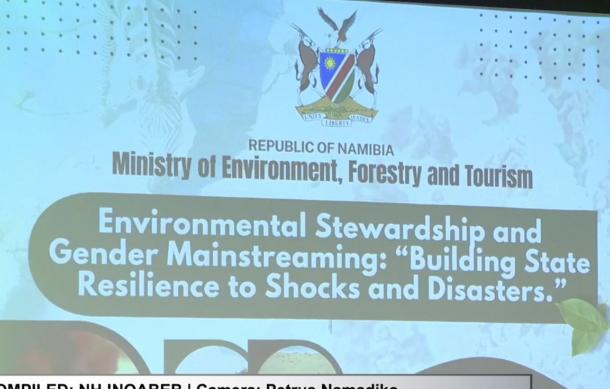
A two-day workshop, hosted by the Ministry of Environment, Forestry and Tourism, will see public officials, together with industry players, probe matters of environmental management and the potential related crisis shocks.
Matters under discussion include climate change, national health, drought and food security, as well as gender inclusivity.
Themed "Building State Resilience to Shocks and Disasters", the seminar will follow a cross-sectoral approach to issues of environmental protection, economic development and creating stronger social cohesion, while protecting national security in the face of escalating climate risks.
Minister of Environment, Forestry and Tourism, Indileni Daniel, said their mandate extends beyond protection of the environment to safeguarding conditions for economic development.
She noted an approximate 1.2-degree Celsius rise in the country's average temperature over the last century, linked to increasing biodiversity threats like wildfires and drought.
"Namibia's commitment under the United Nations Framework Convention on Climate Change, the Convention on Biological Diversity and the Convention on Compact Dissentification are not abstract obligations. They are practical instruments for resilience, for mobilising climate finance and for protecting our people. Climate resilience is not a slogan. It is a development imperative, an economic strategy and a matter of national interest."
Prime Minister Elijah Ngurare addressed the event, advocating for a coordinated approach to environmental stewardship, informed by national interest and security.
"The environment is the common denominator for all of us. And as a country, we must work together in a manner that you have started to do just early in the year. If we do not do it well here at home, we can hardly make an impact if we can develop our responses for disaster. With allthe poorly prepared national approaches for disasters."