


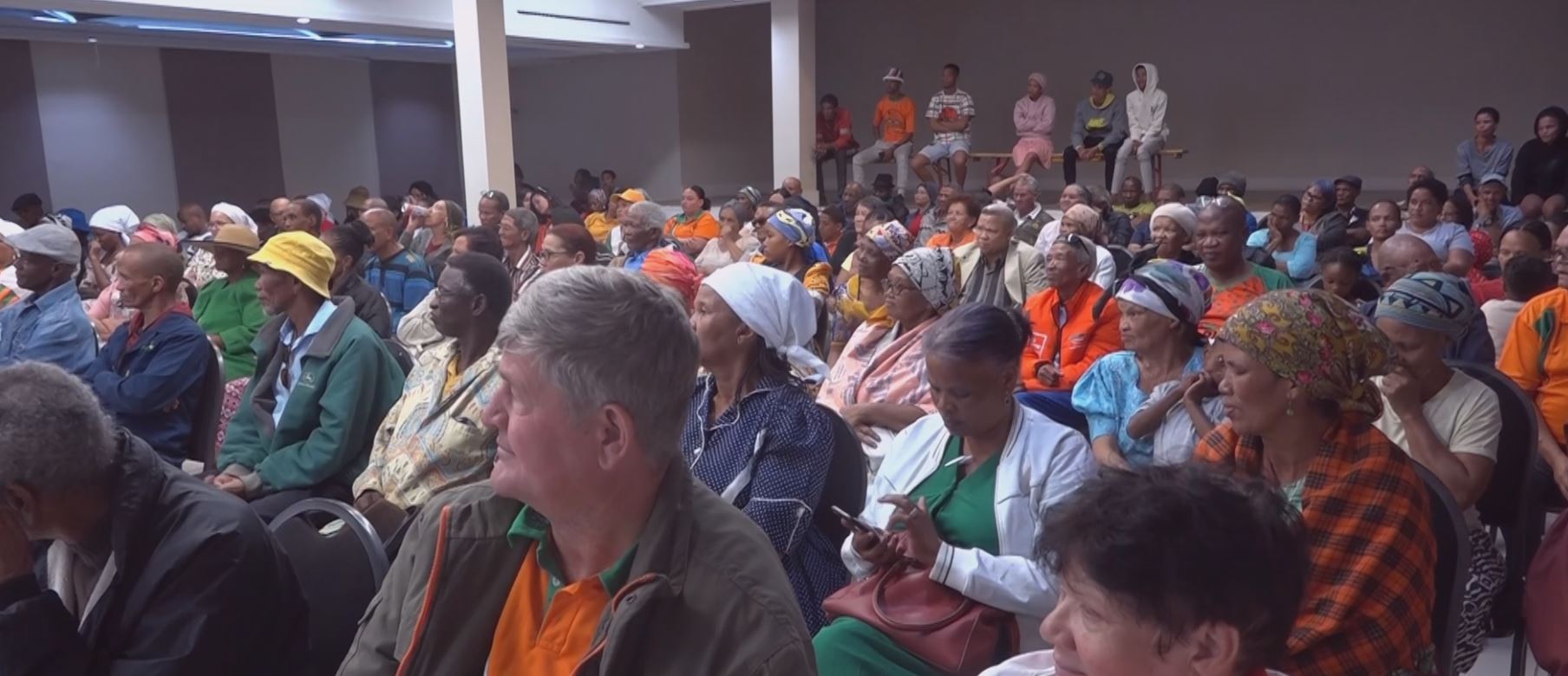
The Landless People's Movement (LPM) hosted a public lecture titled 'Envisioning reparations and their impact on genocide victims' at Keetmanshoop in celebration of Africa Day.
In his public lecture, Landless People's Movement leader Bernadus Swartbooi stated the reparations claim against Germany for the mass killings of the Nama and Ovaherero communities committed during the German colonial period is grounded in international laws and conventions.
Pointing to the model of reparations Germany paid to the Holocaust survivors, Swartbooi advocated individual reparations to be provided to the affected descendants of the genocide victims.
These reparation payments, Swartbooi explained, should include direct payments to survivors as well as compensation for lost properties.
Moreover, he called for a claims conference, where the affected genocide victim descendants and the German government could engage in negotiations for the reparations.
Swartbooi noted Germany, as part of the reparations, also issued a guarantee never to repeat any act of genocide against the Jewish people.
"The Jewish community received funds through organisations similar to what we envision for our own people – a large, registered trust, for instance, in New York or London, that invests the money on the stock exchange. The funds are managed by qualified professionals and overseen by reliable trustees, ensuring individuals receive direct payments while the capital continues to grow. We are developing a similar system and have already initiated discussions with companies in New York to facilitate this process."
Swartbooi bemoaned an offer of a sum of 1.8 billion euros by the German governments through a joint declaration, saying the lowest reparation cost is projected at 10 billion euros.
The bulk of the money will go towards projects relating to land reform, rural infrastructure, water supply and professional training.
Communities of the Ovaherero and Nama descendants in seven regions are set to benefit from the latter projects.
The Mayor of Keetmanshoop as well as the ||Kharas Regional Council Chairperson Joseph Isaack also addressed the event.
"The pursuit of reparations is not merely about compensation but is about restoring dignity, acknowledging historical injustice and building a just, equitable future."
"We gathered because the pursuit of justice, especially for the genocide victims and descendants, is not a historical exercise. It is living with drifting demand. It is an act of love for those who came before us and an act of hope for those who came after us."