


Namibia is facing a growing public debt with levels projected to exceed N$168 billion, surpassing 70% of its Gross Domestic Product.
According to the Friedrich Ebert Stiftung (FES) Namibia, the country's reliance on borrowing at high interest rates and the maturity of the Eurobond in October 2025 have raised concerns about economic stability.
What complicates the situation further, according to FES Namibia, is an increasing debt servicing burden, potentially surpassing the total development budget.
"While most borrowing comes from domestic markets, which is a positive aspect, we face a major external risk in the form of a US$700 million Eurobond maturing in October of this year. So far, we, the Namibian state, have saved up to US$460 million to repay it, but as you can do the calculus, there is still a US$250 million gap that must either be refinanced or borrowed again, possibly at higher interest rates," explained FES Namibia Resident Representative Hajo Lanz, adding that "Even more troubling, our debt servicing bill, that is, the interest and the principal payments, will cost the country some N$14 billion this financial year."
Lanz added that about five percent of government revenue and GDP goes to debt repayment, more than what is spent on the development budget.
He said this leaves less money for roads, schools, clean water, and housing.
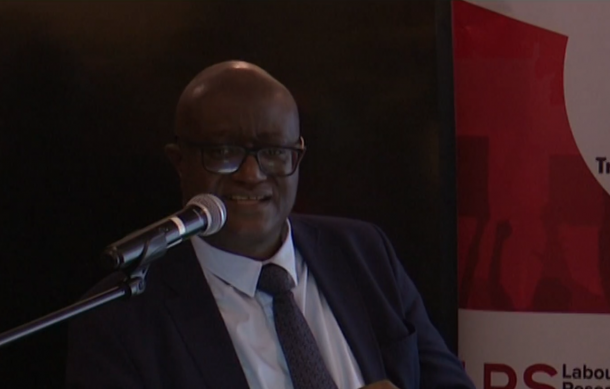
The Executive Director in the Ministry of Finance, Michael Humavindu, said the country is trying to move away from international debt and rather borrow locally, as interest rates from creditors abroad are often very high.
"Total debt actually started to stabilise around 2020 through 2023, because that's when we really started saying, 'But hold on, we need to stop this increase in debt; we need to start looking at fiscal consolidation; and we need to ask the voters, do you really need that expenditure that particular year?' As a result, total debt is expected to decline as a percentage of GDP, and according to the resident representative, it is likely that the debt will decrease over the next five years."
He pointed out that not all debt is bad, explaining that if managed wisely, it can contribute to sustainable solutions in various sectors.