


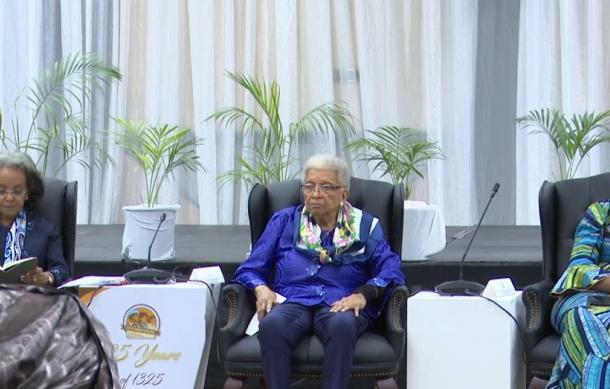
Communities affected by conflict can use women's voices to drive the agenda of achieving lasting peace, justice, and security.
These were the sentiments shared by various participants at an information-sharing session with Great Lake Women at the Silver Anniversary of the UN Security Council Resolution 1325 on Women, Peace and Security (WPS) held in Windhoek.
Women in Africa's Great Lakes region are said to be facing significant challenges due to conflict, displacement and poverty, including high rates of sexual violence, loss of livelihood and limited access to education and health care.
Minister of International Relations and Trade Selma Ashipala-Musavyi called upon the mothers of Africa to bring peace to the continent.
“The Windhoek women cannot boast of having made strides as long as the women in the Great Lakes continue to suffer. We are here to hold your hand, but it has to come from you, and you can do it. So let’s invoke that inner strength of African women. Let us show the world that we love our continent.”
Former President of Liberia Ellen Johnson Sirleaf also gave her input.
“The responsibility now rests with each of you to ensure that there will be true progress, progress that can actually ensure institutional measurements, and for that we ask you to concentrate on the vision and the mission. the vision is to achieve full gender equity and provide equal opportunities for women."
The session highlighted the need to strengthen women's participation in decision-making processes and to institutionalise their leadership in conflict prevention and peacebuilding.
Speakers emphasised the need to empower women as a strategic pathway to achieving lasting peace and sustainable development while maintaining inclusivity among all citizens.
Chairperson of the AU Commission on WPS Liberata Mulamula noted that in the face of adversity, women are the pillars of peace, mobilising communities, fostering transformation and stabilising societies, “but too often we are left out of discussions where decisions are made,” she highlighted.
Co-Chair: FemWise-Africa Network Effie Owuor also shared her sentiments on women during conflicts and displacement.
“They have kept families alive. Their constant point of determination has carried this region through the most difficult moments because of their participation and advocacy. We now see a revitalised and energised peace process taking shape - one that is focusing on placing women not on the margin but at the centre of the table of peace.”
Norway's Deputy Ambassador to the African Union Synne Emilie Bjorna highlighted gender balance.
“At WPS we also need to include men not only in the name of gender equality but also because if we do not so this we run the risk of being told the WPS is a women issue.”
Throughout history, women's voices are believed to have stood at the crossroads of conflict and communities as powerful agents of change, as they carry the potential to transform and reshape the narrative of building peace, security and championing justice for all.