


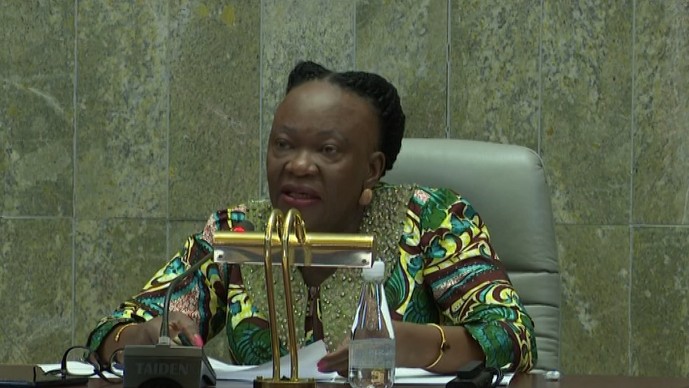
The Minister of International Relations and Trade (MIRT), Selma Ashipala-Musavyi, says the year 2026 began with challenges, including global geopolitical uncertainty and strained cooperation.
Ashipala-Musavyi said this at the annual staff meeting of the ministry and the Namibia Investment Promotion and Development Board (NIPBD).
Namibia has gained access to markets, benefitting national economic stability, especially for small and medium-sized companies.
Global disruptions, though, are a reminder that the country is not immune to external shocks.
Ashipala-Musavyi made staff attentive to that point, advising them to be proactive and strategic in their daily work.
She highlighted that as diplomats and trade and international officers, they should embrace the challenges and be the first line of defence, serving the nation with discipline and intellectual curiosity.
" Extreme weather events and climate related shocks are increasing across the globe, and this directly affects food security, water security, migration factors and sustainable development for Namibia, climate diplomacy must be pursued, not only as an international obligation but as a national priority aligned to resilience and development as drought prone country in our climate diplomacy we must continue to advocate for the United Nations convention to combat desertification and drought in the country."
The minister further urged staff to work in harmony, saying while change brings challenges, it also accords opportunities for growth and collaboration.
"We need one another, and I look forward to working with you all on this critical journey of creating growth at all. Dear colleagues here, I wish to particularly underscore our expanded trade mandate under the Ministry of International Relations and Trade in the context of the African Continental Free Trade Area as well as Namibia's bilateral and multilateral trade obligations to fully leverage the potential of African continental trade, as Namibia must strengthen its trade capabilities through market diversification and targeted focus on priority sectors."
She highlighted four sectors of competitive advantage for Namibia.
These are agriculture, mining, renewable energy and logistics, saying these will remain central to efforts, along with ambitions to expand services, in particular those in tourism, business and financial services, transport and communication.
These sectors are deemed critical to enhancing Namibia's competitiveness and consolidating its position within African trade.