


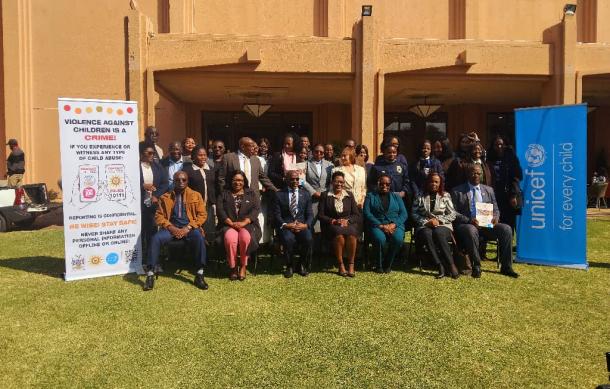
The Minister of Gender Equality and Child Welfare, Emma Kantema-Gaomas, launched the first-ever Child Care and Protection Statistics Report 2014–2023, an important milestone in strengthening the protection and well-being of children in Namibia.
The minister said the report highlights administrative data on child protection services, revealing that 39.6% of females and 45% of males aged 18 to 24 experienced abuse.
She emphasised that the statistics presented in the report should not be regarded as mere abstract figures. It is essential to remember that behind every number lies a child who requires protection from abuse, neglect or exploitation.
The report presents statistics on children supported through the case management system as implemented by regional social workers, as well as statistics on persons who benefited from grant administration processes between 2014 and 2023.
The data indicates that the number of children receiving child protection services rose from 17,303 in 2014 to 19,883 in 2015, marking an early peak in service coverage.
Although there was a slight decline thereafter, service provision remained relatively stable at 19,068 in 2018 before experiencing a further decrease to 16,275 in 2019.
A significant disruption occurred in 2021 when the number of children receiving services dropped sharply to 8,937, the lowest level recorded in the decade. This decline is likely attributable to the effects of the COVID-19 pandemic, which included lockdown restrictions, limited mobility, reduced community outreach and shortages of social workers. These factors collectively constrained access to child protection services.
Following the pandemic, there was a rapid recovery. The number of beneficiaries more than doubled from 8,937 in 2021 to 18,583 in 2022, demonstrating the restoration of child protection services and increased efforts to identify and support vulnerable children.
The upward trend continued in 2023, reaching 21,745 children, the highest number recorded during the ten-year period.
Over the decade, the total number of children benefiting from state grants increased substantially, rising from 164,434 beneficiaries in 2014 to 377,164 beneficiaries in 2023, which represents an increase of more than 129%.
UNICEF Country Representative Samuel Ocran highlighted that UNICEF remains a committed partner to the Government of Namibia and all stakeholders in strengthening child protection systems, improving data and evidence, building the capacity of the social service workforce and ensuring that every child, regardless of where they live or the circumstances into which they are born, is protected, supported and given the opportunity to reach their full potential.