


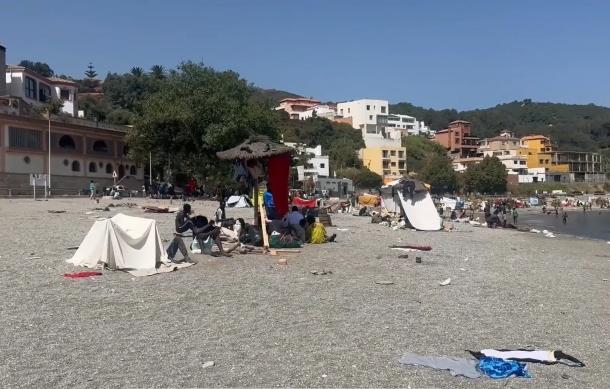
Migrants stranded in Spain's North African enclave of Ceuta are building makeshift camps along the beach as overcrowded reception centres struggle to cope with the latest migration crisis.
They are building shelters from sticks, leaves and cardboard along Benitez Beach. Some rest beneath trees and improvised coverings, while others prepare food along the shoreline.
Moroccan migrant Nizar arrived in Ceuta three days before more than 70,000 people crossed into the Spanish enclave. He said some locals initially gave them food and clothes, but attitudes changed dramatically after the influx.
"All the shops closed their doors to us, and there was no food left. The army started beating us, and the police beat and chased us as well."
Nizar added that migrants had moved to the beach because they considered it safer than staying in the mountains.
"Most Moroccans here set up tents for one simple reason: this location is close to the city centre. Because when we were in the mountains, the army would come after us and send drones to attack us, and the army would strike us, so everyone would flee."
Others on the beach are surviving with little food or protection from the scorching heat, with no certainty over where they will go next.
The pressure is particularly acute for children. Jose Miguel Morales, head of the southern Spanish migrant assistance group Federacion Sur Acoge, said some children sleeping on the streets had been beaten or assaulted.
More than 1,300 migrant children have now been registered in Ceuta's reception system, overwhelming facilities designed for a fraction of that number.
Ceuta, a Spanish territory on Morocco's Mediterranean coast, has become the centre of a major migration crisis after more than 70,000 people crossed into the enclave in late July.
Most have since returned to Morocco, but estimates of how many remain differ sharply. Ceuta's leader Juan Jesus Vivas said on Monday that between 8,000 and 11,000 migrants were still in the city.