


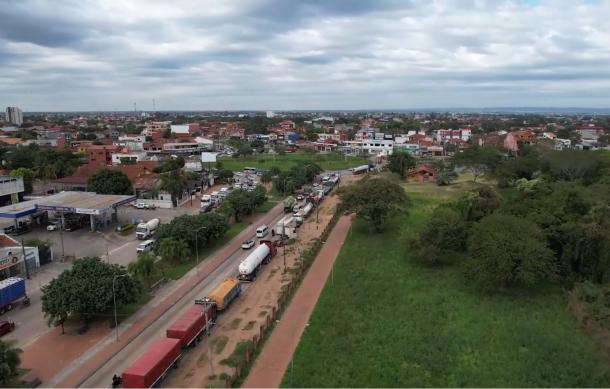
Urban and inter-departmental public transport in Santa Cruz de la Sierra is operating with a heavily reduced fleet, the result of the diesel shortage that has hit the country since May.
Transport companies have cut frequencies and rescheduled journeys due to the lack of fuel.
The crisis, which marked one month in early August, has left queues of between two and five days at petrol stations in cities such as Santa Cruz, Cochabamba and La Paz. Many drivers sleep in their vehicles so as not to lose their place in the queue.
A diesel tanker lorry driver in Santa Cruz, Limbert Vincent, narrated, "I've already been here three days; this is the fourth day to load diesel. And supposedly the president, Rodrigo Paz, said he was going to end the damned queues; he said, 'Those were the words he used.' Instead, there are more queues than before. I don't know if Arce was a magician; the former president was a magician, but there weren't so many queues and there was fuel. Now that we supported this one who was going to sort it out, who we trusted, it turned out worse. Look, even worse. It's the fourth day now, and I can't load."
Daniel Figueroa, a minibus dispatcher, said his route operates with a reduced fleet every day because of the diesel issue.
"We are operating at around 70% of vehicles on a daily basis because of the diesel issue. We're also trying to safeguard supplies; we have several vehicles here that we're converting to run on gas, but that doesn't mean we're at 100% service. The shortage of diesel greatly harms the whole population nationwide, because diesel fuel is fundamental for our vehicles to function."
For users, the effect translates into longer waiting times.
Student Stefanie Schneider said she has to leave home earlier to catch transport.
Citizen Felipe Echeverria estimated that he now leaves 45 minutes earlier than usual and warned that the shortage "affects the entire productive apparatus and transport in general".
The transport sector has declared a "state of emergency" and has called national assemblies in July and August to define pressure measures, including the possibility of defying the national state of emergency in force since 20 June. The crisis stems from the fall in international reserves and a shortage of dollars to import fuel, which Bolivia depends on for around 90%.
For his part, President Rodrigo Paz has publicly apologised for the persistence of the shortage and acknowledged that "some things are not happening as quickly" as he expected.
The head of state attributed the shortfall to networks of corruption and smuggling in the distribution chain and also blamed the lack of investment in hydrocarbon exploration and production during previous administrations.