


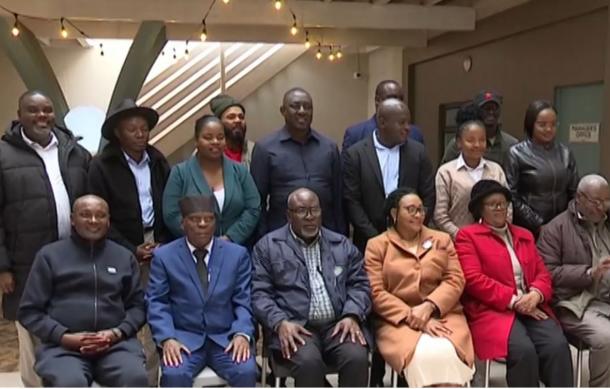
The Parliamentary Standing Committee on Constitutional and Legal Affairs and Petitions has embarked on capacity-building training aimed at strengthening its ability to review international treaties.
The week-long training, held in Swakopmund, follows the recent expansion of the committee's mandate under the Standing Rules and Orders of the National Assembly, which assigned it the responsibility to scrutinise international treaties.
Officiating the training, Chairperson of the Committee, Modestus Amuste, highlighted the impact of the new role, emphasising that a diligent treaty review ensures Namibia engages with the international community from an informed and deliberate position.
He described the training as timely and critical, telling participants that it will deepen members' understanding of treaty frameworks, improve technical knowledge, and promote best practices in treaty scrutiny.
International treaties and conventions, according to Amuste, are considered hard laws – legally binding agreements between states or international organisations that establish rules, norms and principles in areas such as human rights, trade, and environmental protection.
Namibia, as a party to several regional and global instruments, is tasked not only with ratifying but also domesticating and implementing these agreements in accordance with its constitutional and national interests.
"In terms of the standing roles and orders of the National Assembly, our committee has recently been assigned a new mandate: that is, to review international treaties. This is a noble expansion of our duties and one that requires a clear understanding of the process and principles that are involved. While the duty itself is very specific, the importance of performing it needs diligence, knowledge, and experience and good experience on how to handle every element of a treaty."
The training aims to build members' expertise across all stages of treaty engagement, from negotiation and ratification to domestication, interpretation and monitoring.
It also seeks to foster collaboration between Parliament, government ministries and other stakeholders to ensure that treaty commitments translate into tangible benefits for Namibia.
By the end of the week, participants are expected to be better equipped to critically analyse international agreements and contribute meaningfully to the treaty-making and oversight processes.