


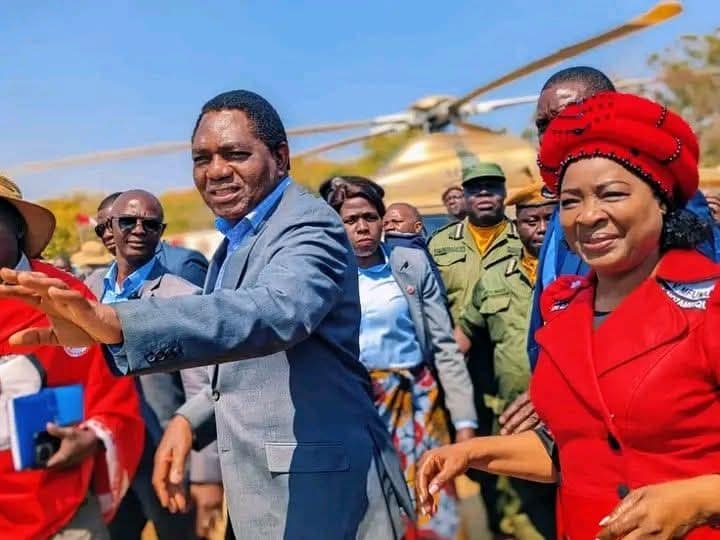
The presidents of Malawi, Zambia, and Mozambique, Lazarus Chakwera, Hakainde Hichilema, and Daniel Chapo, witnessed the Kulamba Traditional ceremony of the Chewa people in the three countries, which takes place annually on the last Saturday in August.
The event attracts traditional leaders from 137 chiefdoms in Malawi, 33 in Mozambique, and 42 in Zambia, as well as hundreds of thousands of people from all three countries, recognised as intangible heritage by UNESCO in 2008.
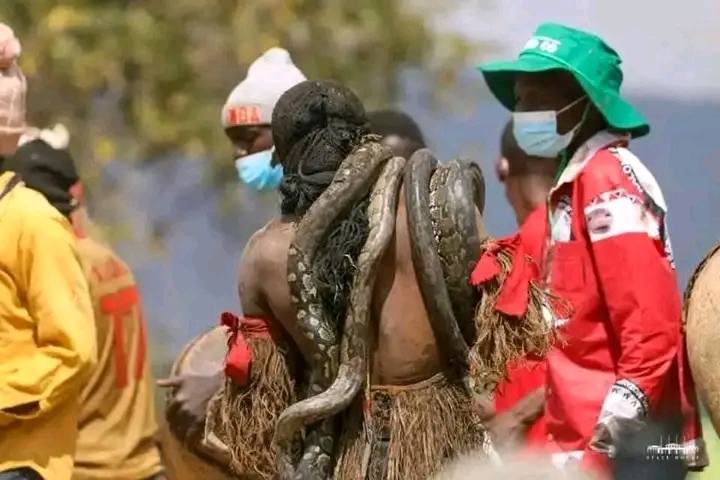
The performers showcased a ritual dance called Gule Wamkulu, both a secret cult and a ritual dance practised by the Chewa people and performed only by members of the Nyau Brotherhood, a secret society of male initiates.
This is done in the presence of Paramount Chief Gawa Undi, who presides over an area extending across these three countries.
Members of the Nyau secret society are responsible for the initiation of young men into adulthood and for the performance of the Gule Wamkulu dance at the end of the initiation process, celebrating the integration of young men into adult society.
Gule Wamkulu takes place in the season following the July harvest but can also be seen at weddings, funerals, and on the occasion of the inauguration or death of a chief or at the Kulamba ceremony.
On these occasions, Nyau dancers wear costumes and masks made of wood and straw.
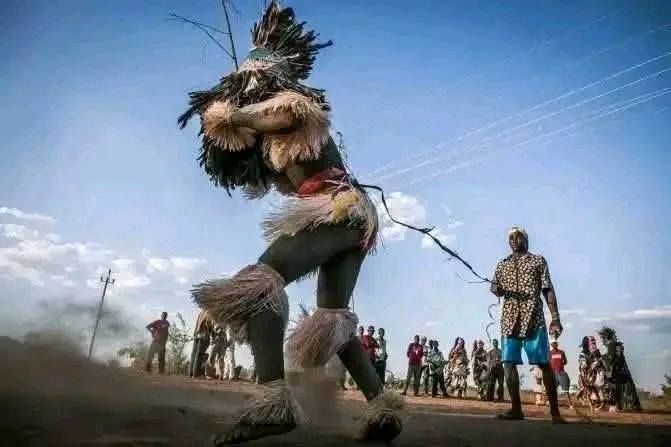
They represent a wide variety of characters, including wild animals, spirits of the dead, spirits of slave traders, and more recent figures like 'motorbikes' and 'aeroplanes'.
Each of these characters plays the role of someone, often evil, who illustrates a form of misconduct, which serves to teach the audience about moral and social values.
These characters perform dances with extraordinary energy, entertaining and frightening the audience as representatives of the spirit world and the dead.
Gule Wamkulu dates back to the great Chewa empire of the 17th century.
Despite the efforts of Christian missionaries to abolish this custom, it has managed to survive under British colonial rule by adopting some aspects of Christianity.
Zambian President Hakainde Hichilema described the ceremony as evidence of the oneness of the people of the region.
Earlier in August, Zambia also marked another ceremony, Likumbi Lya Mize, another interesting manifestation of traditional culture in the Northwestern Province, with masquerades called Makishi.
Likumbi lya maize is also listed by UNESCO as intangible heritage.