


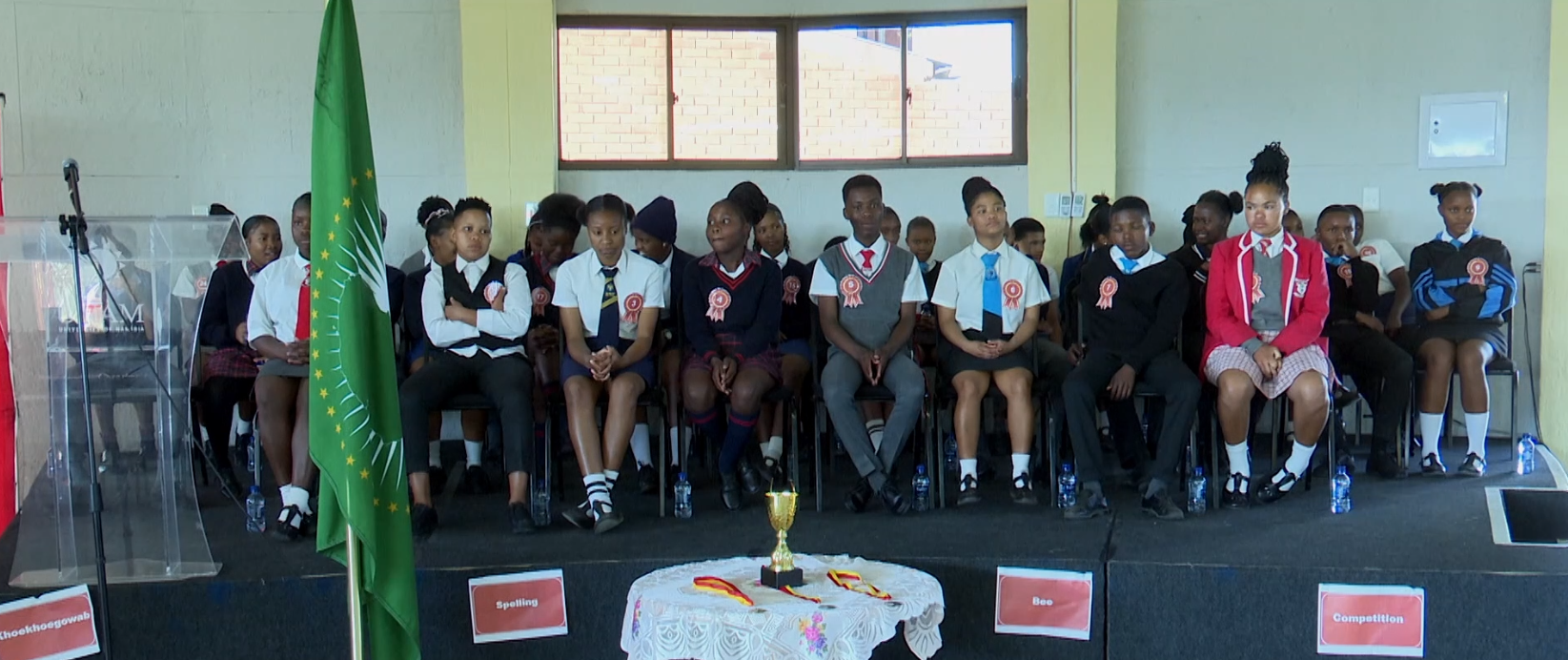
The University of Namibia's Cultural and Linguistic Society has hosted the country's first Khoekhoegowab Spelling Bee, an event aimed at promoting and preserving one of Namibia's national languages.
The competition brought together 38 learners from Grades 8 to 12, representing Acacia, West Mont, Augustineum, Rehoboth, |Anes, CJ Brandt, and Groot Aub high schools. Contestants showcased their knowledge of Khoekhoegowab, a language belonging to the Khoe family and spoken by the Namakhoen, ǂNūkhoen, and Haiǁomkhoen communities across Namibia, Botswana, and South Africa.
The rules required learners to spell each word once, with accuracy and clarity. The competition consisted of three elimination rounds, followed by a final round featuring the top three contestants.
Senior Presidential Advisor Christine ||Hoebes praised the initiative, stressing the importance of preserving indigenous languages as a cornerstone of cultural identity.
"Young people, we as the elders are very happy and proud that our children are standing up, building, and preserving this language. Usually, young people show little interest in their mother tongue – their speaking tends to be weak, their writing is poor, and their reading is even worse. The spoken language is fairly okay, but reading and writing remain a challenge. However, when I look behind me at the 38 young people from different high schools seated here today, as Dlamini said, we can rest in peace knowing our language is being preserved."
Edda Bonn said that Khoekhoegowab is not just a language but a way of living and should be preserved and protected.
"It is actually a tribute from education altogether to the power of our mother tongue, a language that carries not only words but also wisdom, memory, and meaning that give us our identity. Khoekhoegowab is not only a spoken language; it is a lived language. And when children are given the opportunity to learn, to read, and to write in their own home language, they are not just acquiring skills; they are, in fact, building the very foundation of how they think, how they feel, and how they connect to the world."
A panel of judges with expertise in Khoekhoegowab and culture presided over the spelling bee.
The panel included Valerie Isaaks, known for translating the English Bible into Khoekhoegowab; Sidtnee |Narib, a Khoekhoegowab teacher; and Levi Namaseb, a retired UNAM lecturer.
Job Sylvanus, Khoekhoegowab lecturer and section head, expressed his gratitude for the initiative.
"Today is the day to celebrate Namibian heritage. It is a day to celebrate the collective identity of the people of Namibia. It is a day where we want to celebrate the unity and diversity that we are talking about in tangible ways. We want to be the agents of change we want to see. As the Khoekhoegowab-speaking community, we have the responsibility on us to become active in our events and active in our endeavours in terms of language and culture."
Despite concerns of language decline, preservation efforts are high, as NBC's Kaisames radio broadcasts are dedicated to keeping the language relevant in everyday life.
Organisers hope the spelling bee will become an annual tradition, inspiring young people to embrace their linguistic heritage while contributing to broader revitalisation efforts.
The Khoekhoegowab Spelling Bee concluded with Stephanie Dreyer and Senorita Buys from |Nanes Secondary School, along with Victoria !Nowases from CJ Brandt High School, emerging as the top three finalists and winners.