


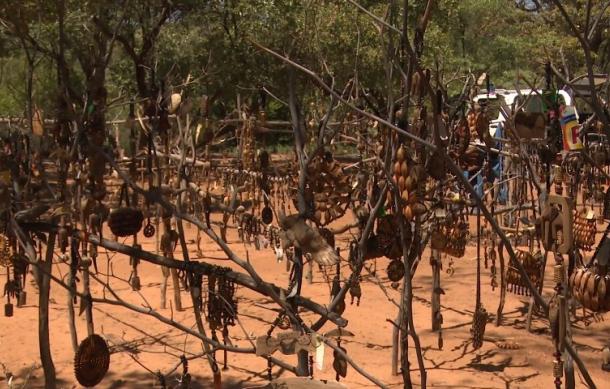
The Ju|'Hoansi Living Museum at Grasshoek, a settlement in the Tsumkwe Constituency, is still not recognised by the traditional leadership, despite having been in existence for 20 years.
The living museum is one of just two institutions of its kind.
The idea behind the establishment of this museum is to keep the culture and the tradition of the San people alive; its purpose is also to show the daily lives and the craftsmanship of the San.
But today it stands quiet, with very little activity occurring; the larger part of the silence during the NBC News visit is because tourist season is at its peak during the winter months.
|Ao !Aici has been working at the museum for 20 years. He said it's been a challenge to get the living museum recognised by the local leadership.
According to him, the lack of recognition hinders donor funding.
"I am calling on the government to help us build rooms for our guests and ablution facilities because that's what most of them complain about. We also don't have an office or a reception where our guests can make bookings. We need a safe place where we can keep our documents."
When we contacted her for comment, the chief of the !Kung Traditional Authority, Lony Arnold, said there are some issues they first have to settle before they can get a consent letter from her office.
She further stated that the Ju/'hoans are not under the !Kung Traditional Authority and that they fall under the Ju/'hoansi Traditional Authority in Tsumkwe; however, Grasshoek is on !Khun land.
Another member of the museum, ǂAsa Nǂamse, informed NBC News that she is an expert in traditional medicines and turns to nature when the need arises.
With the area falling short of a clinic, many turn to her when hit with illness.
Her plea is to get a permit so she may harvest and trade in traditional medicine.
"The clinics are far from here, and most of the time when we call for help, we don't get assistance on time. I am calling on the government to at least help us harvest traditional herbs to make medicine."
Another local resident, Cwi !Aicie, has, for 20 years, entertained and taught tourists about the ways of his people.
"We don't know where to take our visitors; everywhere we go is proclaimed to be either someone's house or someone's cattle post. We are calling on the conservancy to do something about it.
The Ju|'hoansi living museum at Grasshoek employs 99 traditional dancers. Their only source of income is tourism.
They say that when they don't get tourists and no maize meal from the government, they look for other means of survival, like gathering only what is needed from nature.