


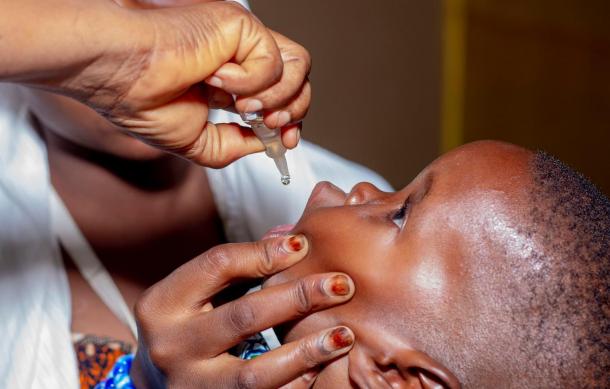
The Ministry of Health and Social Services (MoHSS) launched a polio vaccination programme in the Kavango East and West regions.
This comes after detection of the virus at a sewerage pond at Rundu's Ndama location.
Polio is a disease caused by the poliovirus.
The disease is highly contagious and spreads through contaminated water or food, direct contact with someone infected and poor sanitation and hygiene.
Some inhabitants of Rundu in the Ndama Location settled near the sewerage pond.
Inhabitants also walked through the sewerage yard on a daily basis as a shortcut; this is a risk factor, they shared.
Manager for Polio Incidences, Dr Nguundja Uambaruru, says the MoHSS aims for zero polio infection.
"As a ministry we are doing everything that we can to ensure that there is no transmission. That there is no death and there is no outbreak. Currently there is only an event. We want to make it very clear that we have no case currently. human case, and we want to prevent that from happening by ensuring that we have our children immunised against this polio type two."
The polio disease was detected through the ministry's routine environmental surveillance on 13 November 2025.
The vaccination is a preventative measure to ensure that there is no outbreak.
The Zero Polio vaccination campaign in the two Kavango regions will commence on 15 December and last until 18 December 2025.
The coordinator for the Global Polio Eradication Initiative is Dr Loveday Nkwogo.
"Any child born in April 2016 to date has no immunity against type 2, so the chances of the person coming down with paralysis are high, or maybe dying from the infection when their respiratory systems are affected. So that is why we took the target of under 9. If you look at 2016 to the end of November, that's why we took under 10 people that are 0 to 10 years old. So that will make sure we will build the immunity of those children that are in that age group. So you also look at, if you look at Namibia, we introduced the other aspect area; you can get type 2 immunity through IPV. But the IPV gives immunity for the ones that happen around the blood system, not the ones around the gut. And the IPV 2 we introduced was in 2023."
The virus detected is also known as "circulating vaccine-derived poliovirus".
Upon detection, a team of public health experts was deployed to conduct rapid risk assessments in communities, search for possible human cases, and strengthen cross-border surveillance.
Namibia has been polio-free for many years. The last outbreak was in 2006.
Governor of the Kavango East Region, Hamunyera Hambyuka, urged for calm.
"I call on the media, parents, guardians, carers, community leaders, and all Namibian people to be aware of the disease and prevention measures like mass vaccination of children less than 10 years of age; ensure proper sanitation in communities; disseminate accurate information; and guard against rumours and misinformation."