


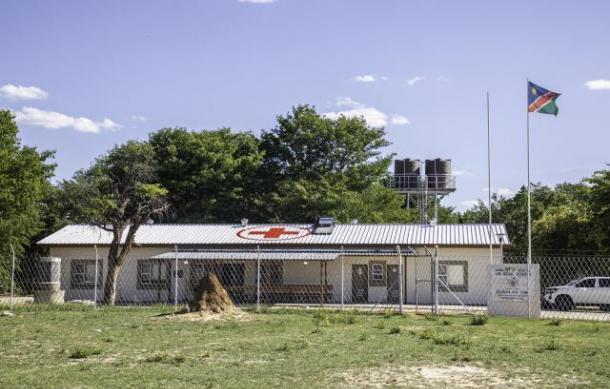
Health facilities in the Musese Constituency of the Kavango West Region are grappling with persistent electricity challenges that are hampering service delivery, particularly at Gcaruhwa Clinic and Rupara Health Centre.
At Gcaruhwa Clinic, enrolled nurse and midwife Christophin Decelestino revealed that the facility treats fewer than 60 patients daily but faces significant operational challenges. Speaking in an interview with Nampa, Decelestino highlighted how electricity outages compound the clinic’s existing problems.
“The challenge that we have right now is transport and electricity outage. Our facility is very small, especially with maternity cases. When you have a maternity case, it’s likely to lose a baby here because we don’t have everything,” Decelestino explained.
She emphasised that electricity failures create additional risks, particularly for vaccine storage and emergency cases. Decelestino made an urgent appeal to the government for infrastructure improvements, specifically requesting a gravel road to ensure the timely delivery of medical supplies and the transportation of patients.
“We fail to get our supplies on time or transport a patient to the state hospital due to our very poor roads and lack of transport,” she said.
At Rupara Health Centre, the electricity crisis is equally severe. Registered Nurse and Acting Supervisor Chrispinus Kanyetu Kanyengo described how frequent power outages disrupt daily operations and compromise patient care.
“The only problem is electricity. I don’t know if this electricity issue affects the whole of Kavango West or if it’s only us, but for us, it is hampering a lot of our activities,” Kanyengo told Nampa during a facility assessment.
He explained that modern medical equipment depends heavily on electricity, making power cuts particularly problematic.
“These days, we are mostly dependent on new technologies. Our machinery is electrically dependent. The most challenging problem I’ve faced since I arrived here two years back is when electricity trips so frequently,” he said.
The situation becomes critical when the backup generator fails.
“There’s a generator that we were using before, but it developed a fault, and until now it has not been fixed. I don’t know what happened to the generator. Now it’s not working. So, when the electricity shuts down, everything is scattered,” Kanyengo said.
Kavango West Health Programme Officer for Infrastructure Planning and Management in the Ministry of Health and Social Services, Boniface Hamutenya, acknowledged the widespread nature of the electricity problem affecting health facilities across the region. He outlined the ministry’s efforts to address power supply challenges at various health centres.
The electricity problems have real consequences for patients seeking medical care. Maria Mukendwa, a community member from Musese Constituency, shared her experience when she visited Gcaruhwa Clinic during a power outage in November 2025.
“I went there with my sick child at night around 21h00 for an emergency, but there was no electricity. The nurse had to use her phone torch to examine my baby. It was very scary because we couldn’t see properly, and I was worried they might miss something important,” Mukendwa recounted.
She added that the lack of power meant the clinic’s refrigeration system was not working, raising concerns about vaccine storage.
“The nurse told us some vaccines might not be good because the fridge was not working for many hours. This is not fair to our children,” she said.
Kavango West Regional Director of Health in the Ministry of Health and Social Services, Fransiska Hamutenya, outlined a comprehensive strategy to address these systemic challenges. In her resource allocation plan, she confirmed that immediate steps are being taken to restore power backup systems.
“Rupara Health Centre’s backup power is under repair. A purchase order was issued to a supplier for the repair of a burnt alternator,” Hamutenya stated.
She revealed that the region has allocated substantial resources for long-term solutions.
“We have budgeted for the procurement of new industrial generators for the health centres with outdated or no backup power for the financial year 2026/27. The region is also looking into the procurement of household generators as backup power,” she explained.
The Kavango West Regional Director of Health also addressed transportation challenges affecting patient referrals and emergency responses.
“Rupara Health Centre’s ambulance is under repair following an accident, and we are anticipating it to be back on the road by January 2026,” she said.
As an interim measure, the region has redistributed resources to maintain emergency services.
“The region received three new ambulances, of which one was allocated to Nankudu District Hospital to assist with emergencies within their district, under which Rupara Health Centre falls.”
Hamutenya acknowledged that infrastructure challenges extend beyond electricity and transportation.
“The region is aware of the shortage of staff accommodation across all facilities, and one by one, all needs will be addressed. The Health Directorate of Kavango West is always in touch with the Directorate of Health Technology and Infrastructure Management in Windhoek for planning purposes.”
The electricity crisis in Musese Constituency’s health facilities highlights broader infrastructure challenges facing rural healthcare delivery in Namibia. While regional authorities have outlined plans for systematic improvements, healthcare workers and patients continue to bear the immediate consequences of an unreliable power supply.
The situation calls for urgent intervention to ensure that basic healthcare services remain accessible and safe for communities in remote areas, where alternative medical facilities may be hours away by road, Hamutenya said.