


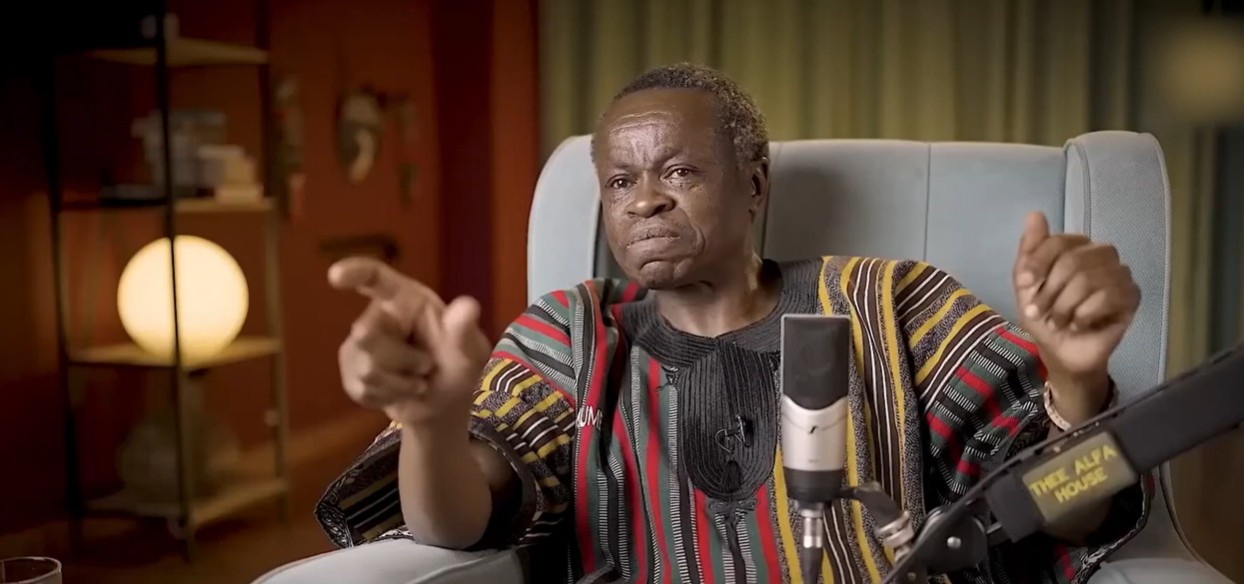
Renowned Pan-Africanist Patrick Lumumba says the United States' foreign policy is increasingly displaying contradictions that reflect a power struggling to define its role in a changing global order.
In his view on the Venezuela and US conflict, he argues that the United States continues to champion inward-looking nationalism under slogans such as "Make America Great Again."
Professor Lumumba, making his analysis on an independent media platform "Thee Alfa House," says recent American diplomatic engagements sound less like messages to the international community and more like speeches aimed at the US Congress and domestic voters.
According to him, this has resulted in what he describes as a "split personality" in American global conduct.
Lumumba argues that this unresolved tension has produced an inconsistent foreign policy approach - one that blends economic diplomacy with coercion and military threats.
He points to initiatives such as the African Growth and Opportunity Act, alongside U.S. investments in health and education across Africa, as evidence of soft power engagement.
Yet, at the same time, he cites Washington's confrontational stance toward Venezuela as an example of what he calls 'gunboat diplomacy'.
“There has always been an appetite for regime change, not only with Maduro, but even with Hugo Chavez, because Hugo Chavez was seen to be pro-Cuba at one time. And this must be seen in the context of controlling the Caribbean and ensuring that you have a buffer. Because in Latin America, you also have an administration in Brazil with Lula, which is not pro-United States of America. So all those factors conjoin and tell you that there is a single threat, and they must not be seen independent of the fact that there is a rising power, China, and that the United States of America has said that as we speak now, there is a trade war between China and the United States of America. So you need Venezuela, and perhaps this is stretching it too far, so that if I don't get this particular Nobel Prize, give it to somebody in Venezuela so that we are going to use that as the basis of ensuring that there is regime change.”
According to Lumumba, history shows that declining global powers often behave erratically as they attempt to preserve dominance, warning that the United States is now exhibiting those very traits.
Lumumba further warns that the consequences of US foreign and trade policies are increasingly being felt domestically and predicts that these pressures will likely influence upcoming midterm elections in America, as voters respond to the growing impact on their cost of living.
He adds that despite claims of promoting democracy and stability, the US pressure on Venezuela reflects a strategic interest in control over one of the world's largest proven oil reserves.
“So when you look at all these threads and you look at the fact that there is a military industry and that there is something, there is also a business aspect that may be hidden to the uninitiated; then you can see the linkage. Those who want activity are in order to control the oil in Venezuela, and to control the administration in Venezuela.”