

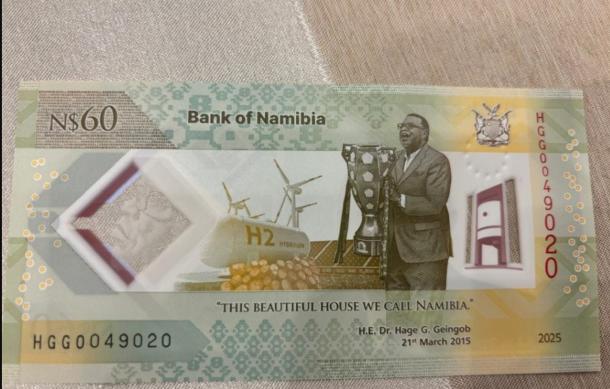
The Namibia dollar has strengthened against the US dollar compared to the same period last year.
As of the start of this year, the exchange rate stood at around N$16 to US$1, an improvement from the N$18 recorded around this time in January 2025.
The Bank of Namibia says recent movements in the Namibia dollar reflect forces beyond its borders.
Responding to questions from NBC News on the strengthening Namibia dollar, Deputy Director of Communications and Sustainability at the Bank of Namibia, Naufiku Hamunime, said the appreciation of the Namibia dollar against the US dollar has offered some relief from inflation linked to imported goods, including fuel, food, pharmaceuticals, and capital items.
According to the Bank, a firmer currency lowers the local cost of imports, which helps reduce pressure on consumer prices and the merchandise trade account.
However, the Bank cautioned that price movements do not follow exchange rate changes uniformly, as domestic prices are shaped by global commodity prices, transport costs, taxes, pricing structures, and fiscal policy.
Hamunime said food inflation remains influenced by supply constraints, climate-related shocks, and international price movements, meaning that exchange-rate gains alone cannot determine price outcomes.
Overall inflation, Hamunime noted, reflects a mix of domestic and global factors.
On risks linked to further currency gains, the Deputy Director said a continued rise in the Namibia dollar could affect export sectors and tourism operators whose earnings are largely in foreign currency.
While importers and consumers may reap benefits, exporters may face pressure on their margins, particularly when they incur local costs but receive dollar-based revenues.
The Bank also said tourism may experience pricing pressure as Namibia becomes more costly for visitors from outside the Common Monetary Area.
These effects, Hamunime said, are monitored to assess impacts on competitiveness, export earnings, and economic growth.
The Deputy Director said the Bank does not target a specific exchange rate against the US dollar, as movements mainly reflect developments in global markets and the South Africa–US exchange rate.
Namibia’s monetary framework, which includes the peg to the South African rand, remains central to policy.
According to the Bank, the peg supports price stability, trade and investment predictability, and policy credibility.
The Bank said maintaining reserves remains key to confidence in the peg and to absorbing external shocks, while the fixed exchange-rate regime allows Namibia to benefit from inflation trends and monetary policy developments in South Africa.