


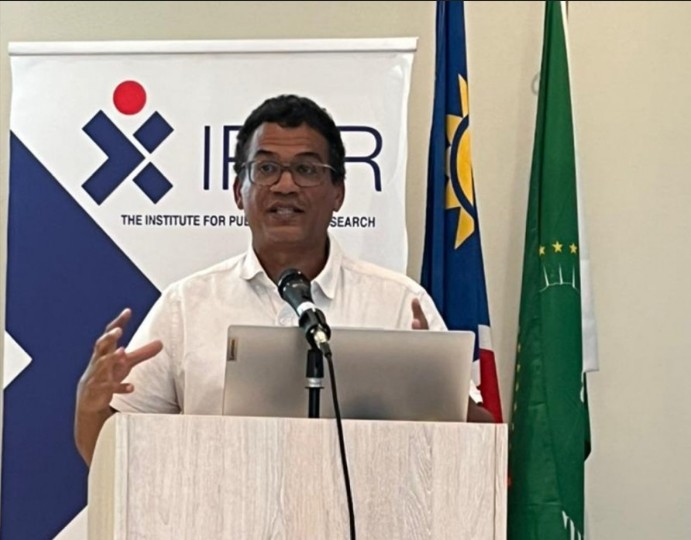
The Institute for Public Policy Research (IPPR) has called for the revision of the Cybercrime Bill.
IPPR's Research Associate, Frederico Links, warns that its broad provisions risk violating privacy, freedom of expression and other constitutional rights.
In a government submission, IPPR urged reforms to the Bill to align with the UN Convention against Cybercrime and the Budapest Convention.
Despite Namibia's signing the UN Convention last year, Links said the draft lacks sufficient safeguards and offence clarity.
He highlighted overly broad clauses on unauthorised access, interference, phishing, spamming, cyberbullying, and cyberterrorism, with disproportionate penalties threatening privacy, expression, and due process rights.
Links warned that vague provisions on content moderation, pornography, undesirable content and fake profiles could criminalise lawful speech and pose constitutional risks.
The submission further recommends that child sexual abuse material offences be removed from the Cybercrime Bill.
Instead, he recommended addressing them comprehensively under the draft Combating of Sexual Exploitation Bill to ensure harmonised protections for minors.
Similarly, he noted provisions relating to electronic harassment should be reviewed to avoid overlap with the draft Combating of Harassment Bill.
"This is the surveillance state; this is the deep, deep surveillance state. So across these provisions, the pattern is legality gaps, vague triggers, and terms such as 'reasonable grounds' and undefined terms such as 'reasonable grounds' and 'public interest'. What is public interest? Is public interest state interest? Or is it actually public interest? Is it human interest? Is it in my interest? Is it in your interest? What is public interest? Unlawful material – what is unlawful material? Who decides what constitutes unlawful material when clear and concise definitions are lacking, leading to undefined terms and weak foreseeability? Necessity and proportionality failures, no serious offence thresholds, and no explicit least intrusive means tests."
The institute cautioned that surveillance powers such as real-time traffic data collection and content interception need strict judicial oversight to prevent abuse.
Links noted that the draft is still a work in progress, urging the ICT ministry to continue broad consultations.