


African leaders have been urged to move beyond policy discussions and deliver tangible results for citizens, as the continent charts a new path for agricultural transformation.
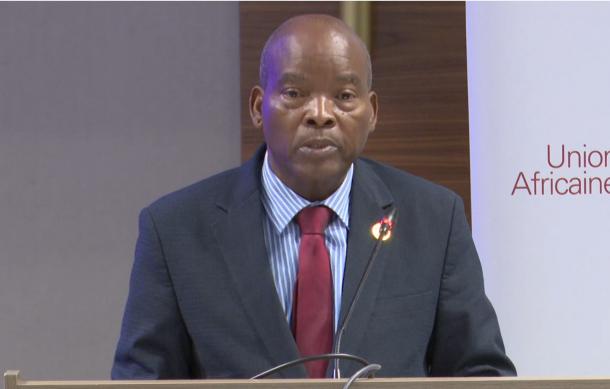
Speaking at a high-level engagement, African Union Commissioner for Agriculture, Rural Development, Blue Economy and Sustainable Environment, said Africa's future depends on what leaders implement today, not what is written on paper.
Moses Vilakati criticised the slow pace of change, warning that excessive focus on policy revisions is failing ordinary people.
" Africa's future depends on what we choose to deliver today, not what we plan, not what we discuss, not what we write, but what we deliver. Is there no interpretation? Yeah, but because there were some delegates that were hustling there. Every policy we craft, every investment we make, every structure we establish must answer one question. Are we doing enough to ensure that every African has access to safe, sufficient, and nutritious food? If we're honest enough, the answer is no."
His remarks come as the continent prepares to implement the CAADP Kampala Declaration (2026-2035), a 10-year results-driven framework aimed at transforming Africa's agri-food systems.
The declaration outlines six strategic objectives, supported by 22 targets and 48 interventions, with a strong focus on sustainable and resilient agricultural growth.
Key targets include increasing agricultural productivity and output by 45%, tripling intra-African trade in agricultural products and inputs.
Others are reducing malnutrition - including stunting, wasting and obesity - by 25% by 2035. The plan also aims to ensure that at least 60% of Africans can afford a healthy diet within the same period.
The Deputy Minister of Agriculture, Fisheries, Water, and Land Reform, Ruthy Masake, stressed the need for coordinated action at national and regional levels to achieve food security and economic growth.
"Namibia recognises the vital role of agriculture in driving inclusive development, improving livelihood and enhancing resilience in the face of climate change and other emerging challenges. As a country, we remain committed to strengthening our agricultural system through innovation, data-driven planning and regional collaborations."
The renewed push places pressure on African governments to translate commitments into measurable outcomes, as stakeholders warn that failure to act could undermine the continent's long-term development goals.