


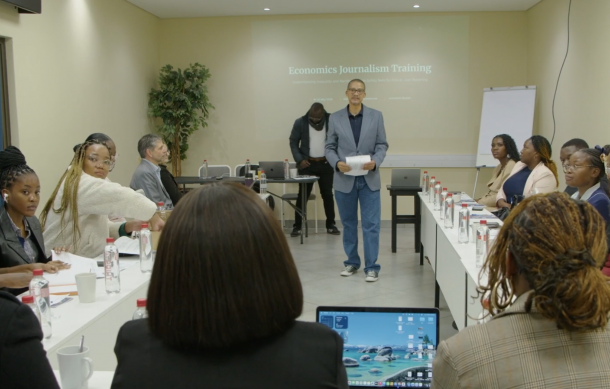
Junior journalists from across the country have gathered for a two-day economics journalism training workshop in Windhoek that is aimed at enhancing journalists' reporting on inequality, tax and social protection.
The training seeks to equip journalists with economic knowledge to better cover stories of public interest.
The workshop is held under the theme "Understanding and reporting on inequality in the nation's social safety nets, connecting them to the national budget and tax systems".
The training's facilitator, Johnathan Beukes, says the training is designed to evoke a culture of people-centred reporting when it comes to reporting on economics.
The sessions on the first day focused on four sessions around inequality, tax, and social protection.
Experts also unpacked topics on Namibia's economic history, social justice, and the Basic Income Grant.
The training further highlighted a need for economic literacy amongst journalists, urging them to make use of impactful reporting rooted in AI data skills, social justice and analytical literacy.
Participants are also expected to learn about or how to understand Namibia's tax systems and how they are the primary source of public funds.
Day two of the workshop will focus on data interpretation with artificial intelligence – AI – and spotting social spending, safety net ideas and ethical reporting.
Experts from various institutions, including Dr. Dirk Haarmann and Dr. Claudia Haarmann from the BIG pilot project, and representatives from the field are facilitating the training.