


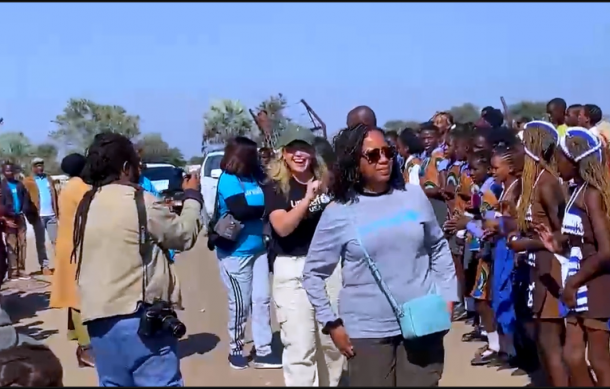
Delegates from UNICEF, accompanied by prospective donors from the United States, visited the Tsumkwe Settlement to engage with community leaders and assess development initiatives.
The delegation met with the Tsumkwe Constituency Councillor and Principal of the Tsumkwe Primary School and is expected to visit Tsumkwe Secondary School, the Tsumkwe Clinic, the Palm for Life cleaning campaign, and the Traditional Authority.
The purpose of the visit is to gain a better understanding of the challenges faced by residents and institutions.
UNICEF Country Representative Samuel Ocran said Tsumkwe was chosen because it is home to one of Namibia's marginalised communities.
"According to the principal, the number of San children in schools has increased significantly, which is really positive, and all we need to do is to make sure we keep these children in school so they can develop and achieve their full potential."
Accompanied by the Deputy Director of Education in Otjozondjupa, Uerivangera Tjivikua, the Tsumkwe Primary School principal, Veli Indongo, highlighted both the challenges the school faces and the positive impacts thereof.
"For the hostel, we have opted to be overcrowded; we have more than 400 learners that were supposed to carry 150 learners."
He added that due to a shortage of classrooms, some learners are taught in the afternoon, but teachers continue to make a positive impact on the learners' education.
During the engagement with the constituency councillor, he said that they are working hard to empower the community by investing in various development projects.
Petrus Mutji added that there is a need to establish vocational training centres in Tsumkwe to enable the youth to continue their studies within the constituency instead of travelling long distances to towns.
He noted that travelling far from home often contributes to school dropout rates among young people.
"Now we have AS level for our kids and complete grade 12 here in Tsumkwe before going to university, which is quite a milestone, so we don't need to send kids out. As I said, challenges are a lot; it's either transportation or they don't have accommodation where to stay."
The delegation will use the information gathered to strengthen collaboration and support efforts aimed at improving the well-being and development of children and communities in Tsumkwe.