


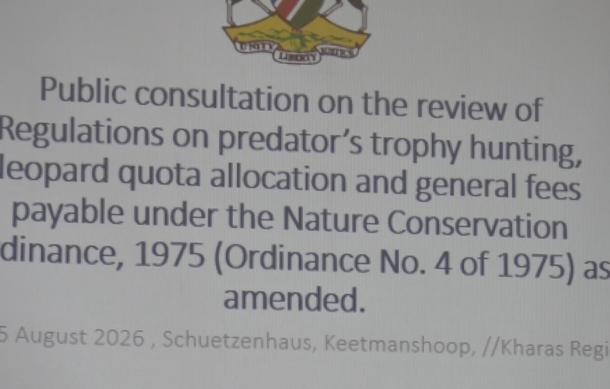
Stakeholders in the ||Kharas Region have expressed mixed feelings over the proposed hikes in trophy hunting fees as part of reviewed regulations.
They shared their sentiments at the stakeholder consultation held in Keetmanshoop.
Farmers and professional hunters attended stakeholder consultations, reviewing the proposed draft regulations on predators' trophy hunting, leopard quota allocations and general fees payable under the Nature Conservation Ordinance of 1975, as amended.
The fees are expected to increase by between 100 and 300%.
Owner of a game farm, Lambert Vos, said, "Obviously nobody would be happy with increases. But surely there should be an increase. And there was an open discussion, which we appreciate, where we can give our input to say this is fair and this is not fair. Some of the increases might have a negative effect on the businesses and companies like ourselves and maybe on hunters that are coming over. But yes, it's not all bad."
"This is another issue of exploring unemployment with all this increment. The government must look into it, so sustainable use of all these resources of government, and all these increments that the government proposed, must be in line with not creating a situation with people sitting without a job at the end of the day."
Control Warden Elton Kuruseb said the ministry proposed the fees to supplement its stretched budget.
"The ministry is also looking in terms of operation cost and cost of controlling all these activities, and therefore it is only prudent that the ministry increase prices by certain dollars. I think the economies of the country are growing. As the ministry, we are one of the economic ministries. And also we sort of… the budgeting is always limited."
Overall, the stakeholders supported the proposed regulations.
It seeks to replace the leopard trophy hunting quota with a permit expiring within 30 days in efforts to benefit the broader Namibians and regulate trophy hunting of cheetahs and hyenas as well.
"What I understand is that they want to collaborate with international standards. That's alright. My objection is if they want to do it internationally, they must also look at compensation done by wild animals," emphasised Conie Nolte, owner of Quiver Tree Forest.
The Ministry of Environment, Forestry and Tourism (MEFT) is conducting the consultations countrywide.