


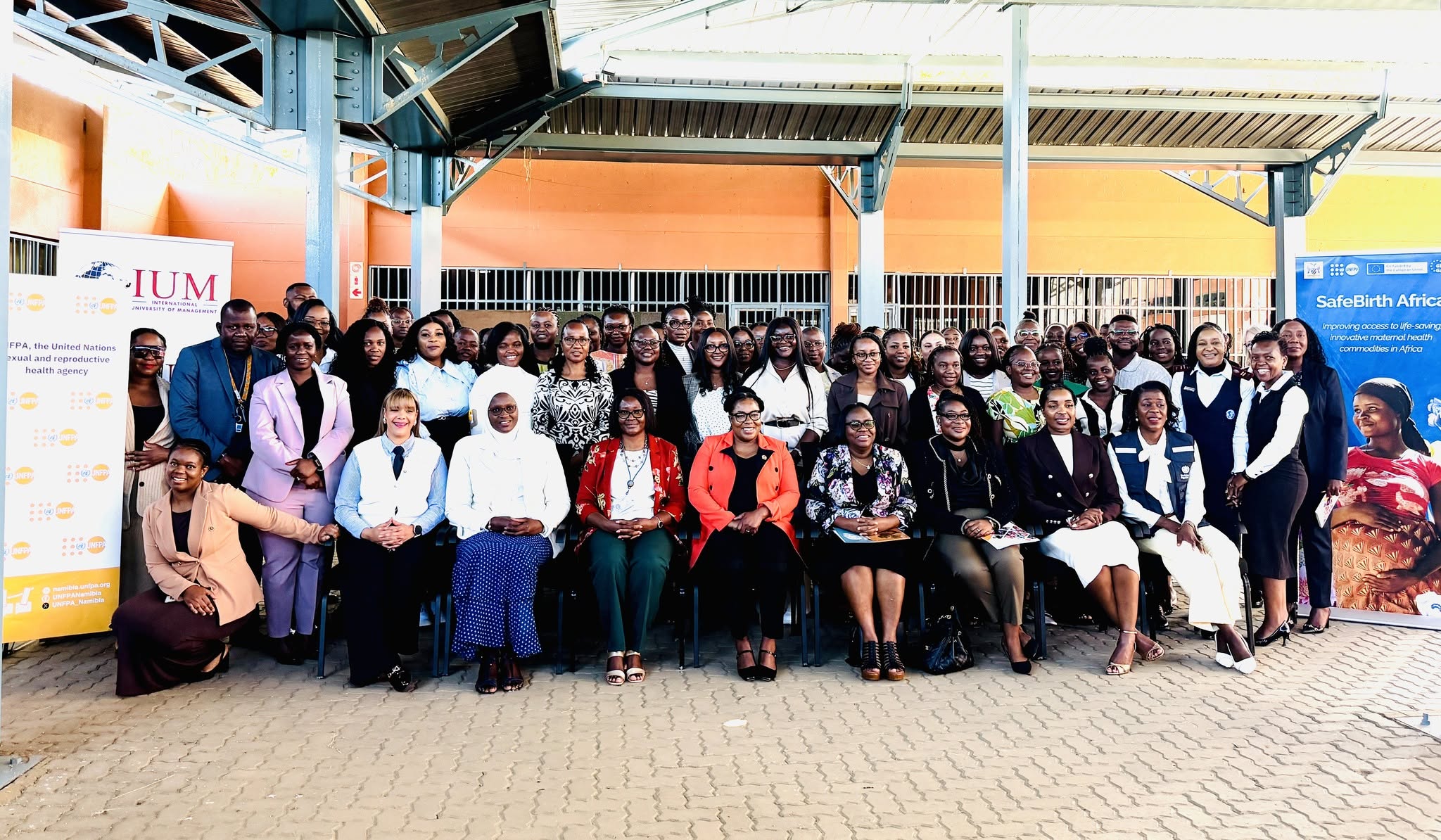
The Safe-Birth Africa Project has launched a three-day national training programme aimed at strengthening health workers' response to postpartum haemorrhage and other obstetric emergencies.
The training, running from 7 to 9 September, brings together healthcare workers and trainers from across the country and focuses on the WHO-recommended E-MOTIVE care bundle for early detection of blood loss and immediate treatment.
The training is supported by the United Nations Population Fund (UNFPA) and other development and technical partners, including the European Union.
Namibia's maternal mortality ratio declined from more than 450 deaths per 100,000 live births in 2000 to 139 in 2023. However, a confidential inquiry found that 54% of maternal deaths reviewed were preventable through improved clinical care, while obstetric haemorrhage accounts for 16% of maternal deaths.
Deputy Minister of Health and Social Services Suzan Ndjaleka says the remaining preventable deaths require health workers to be better equipped to identify complications and act without delay.
"By training you, our top clinical leaders and educators, we are creating a catalytic ripple effect. You are here to master this bundle. But more importantly, to carry this knowledge back to every district, every region, every clinic, and every maternal world across Namibia. The empowerment is with you. We are here to give strategic leadership and to support you in your professions. To our master trainers gathered here in this room, you are not merely participants in a training programme, doctors. You are champions of maternal health."
United Nations Population Fund (UNFPA) Namibia Representative Erika Goldson says reducing maternal deaths will require stronger clinical responses, particularly in regions with higher mortality rates.
She says the E-MOTIVE approach has shown significant results, with a major clinical trial recording a 60% reduction in severe postpartum haemorrhage.
"A key objective of this initiative is to ensure a provision of respectful, woman-centred maternity care. Every mother deserves to give birth in an environment that upholds her dignity, respects her choices, and treats her with cultural sensitivity and kindness, even during the high-stress moments of an obstetric emergency."
The Ministry says the initiative forms part of broader efforts under Namibia's NDP6 and the Ministerial Strategic Plan 2025-2029 to reduce maternal and newborn deaths and strengthen the quality of maternal healthcare services across Namibia.