


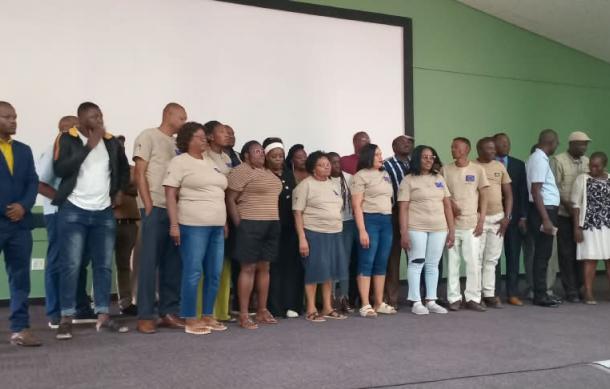
Integrated Rural Development and Nature Conservation, in collaboration with the European Union, has awarded grants worth N$1.2 million to 10 grassroots organisations.
The funding is aimed at strengthening community voices and advocacy around rights and benefits linked to Namibia's natural resources.
Government says civil society organisations remain important partners in advancing national development and addressing service-delivery gaps.
National Planning Commission Acting Executive Director Sylvester Mbangu says government remains committed to strengthening collaboration with civil society and ensuring that local communities have a voice in development processes.
Mbangu says NGOs and community-based organisations play a critical role in representing local interests, particularly in communities affected by natural resource development.
He says the National Planning Commission has a dedicated civil society desk to coordinate engagement between government and civil society organisations.
"The National Planning Commission unveils a transformative N$42 million equivalent to approximately 2.1 million euros grant package awarded to three vital civil society initiatives, one, Namibia Development Trust and Integrated Rural Development and Nature Conservation for building stronger natural resources-based civil society organisations to improve governments' rights and benefits."
For the European Union, the funding forms part of its broader support for strengthening local civil society and promoting transparent and accountable management of natural resources.
EU Ambassador Ana-Beatrize Martins says civil society organisations have an important role to play in protecting community rights, particularly as Namibia advances its green industrialisation agenda.
She says the EU's Global Gateway partnership with Namibia on green hydrogen and critical raw materials cannot be driven by governments and companies alone.
"CSOs had to attend training activities in full as a basic requirement for receiving financial support. Through that training, they developed action plans and budgets and built their skills and advocacy strategies."
Integrated Rural Development and Nature Conservation Executive Director John Kasaona says more than N$300,000 of rural residents live in conservancies that form part of Namibia's nature-based economy.
However, Kasaona says securing community rights remains a challenge, with pressure increasing on land, water, wildlife and cultural resources.
" Very often decisions that affect people's lands, water, wildlife and cultural heritage are made without their voices being heard. This is why today matters. The grants we are awarding are about one simple idea, and that is that communities and those organisations that represent them must have the means to speak about themselves."
The grants are expected to strengthen the capacity of grassroots organisations to advocate for community rights and ensure greater participation in decisions surrounding Namibia's natural resources.