


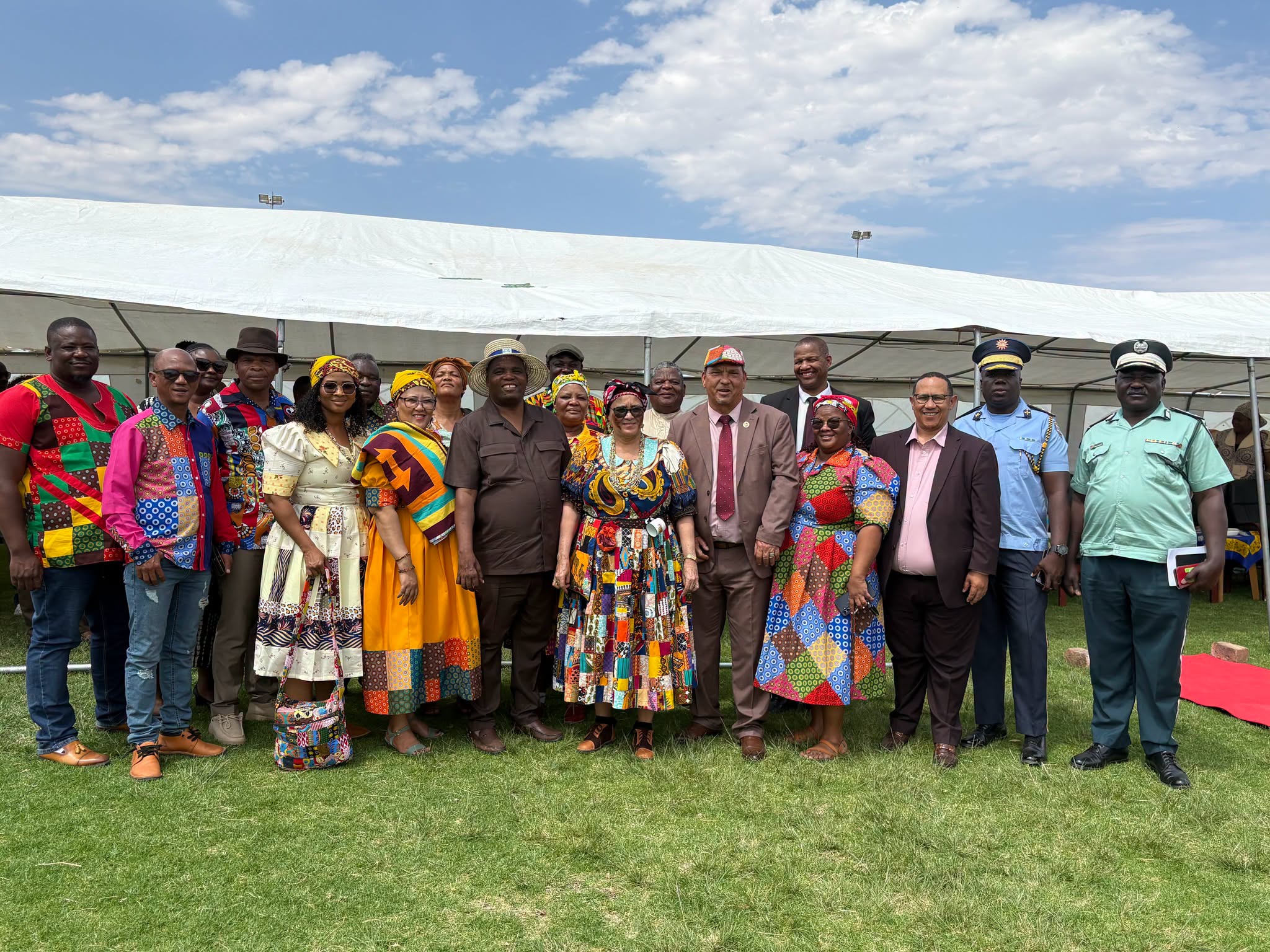
Vice President Lucia Witbooi has called for greater investment in arts, culture and heritage sectors as they have greater contribution to employment, entrepreneurship, tourism and overall development.
Witbooi made the remarks at the second Hardap Regional Arts and Culture Festival at Mariental.
The festival brought together artists, cultural practitioners, educators, entrepreneurs and community members to celebrate Namibia's diverse cultural heritage.
It was held under the theme, "Rooted in Heritage, Driven by Creativity, Inspiring our Future."
Vice President Lucia Witbooi said culture should not only be viewed as something inherited from previous generations, but as a foundation for shaping Namibia's future.
“Culture is therefore not simply something we inherit from the past; it is a living foundation upon which we continue to build our national future.”
She highlighted Namibia's internationally recognised heritage, including Twyfelfontein and the Namib Sand Sea, as well as intangible cultural practices such as Omagongo festival and Nama musical traditions.
The Vice President also stressed the economic value of the creative industries in creating jobs, support businesses, promote tourism and provide young people with opportunities to build livelihoods.
“To our young people, value your creativity and recognise that your talent can become a profession, a business and a livelihood.”
Hardap Governor Riaan McNab said the region remains committed to creating opportunities for artists and young creatives.
“Arts and culture are not merely about entertainment. They are powerful instruments for preserving our identity, bringing communities together, empowering young people and creating opportunities for economic participation.”
The Director of Arts M'Kariko Amagulu explained that arts and culture help communities preserve their history while developing creativity, confidence and communication among young people.
The festival also provided an opportunity for local entrepreneurs to showcase traditional wear, crafts and locally produced food.