


Plans for the envisaged formation of the Aminuis Conservancy are gaining steam.
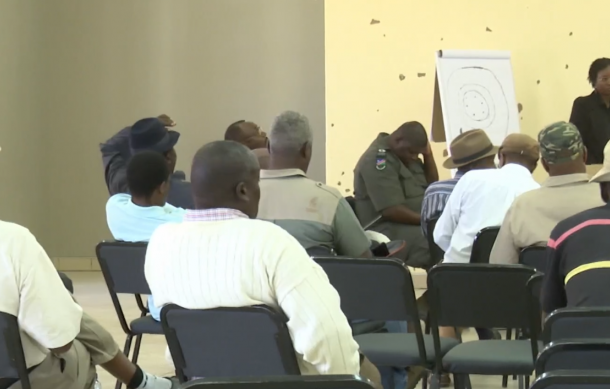
Officials from the Ministry of Environment, Forestry and Tourism recently engaged with traditional leaders in the Aminuis Constituency on the project.
The Chief Warden in the Ministry of Environment, Forestry and Tourism, Uatirohange Tjiuoro, stressed that it is important for the ministry to engage with traditional authorities who are custodians of customary land.
Aminuis residents, through the Chief Hosea Kutako Foundation, have proposed the establishment of a conservancy in the area.
Tjiuoro pointed out that the engagement touched on the legal basis and general understanding of conservation, as well as the pros and cons of establishing a conservancy in a communal area, amongst other key aspects.
"So today we look at a couple of things, such as the legal foundation, such as why and how the conservancy should be formed. That was very important, as we also discussed the rights that the nature conservation ordinates provide to this community. We discussed the legal basis and the general as to how the conservancy should be formed and what the procedures are, and also we interacted with the community on what the key questions are that they want to ask. It was really a productive day."
Some members of Tradional Authorities in the area also supported the initiative.
"Before independence, wild animals were found in commercial areas, and if you were caught with a wild animal, you would be taken to jail. Another issue was that we hunted these animals without thinking about preserving them for future generations,” said Senior Traditional Councillor of the Ovambanderu Traditional Council, Noah Kangueehi.
“It was an informative session, during which government officials provided relevant information on conservation and updates on the benefits derived from conservation. They also discussed how to protect wildlife,” added Andreas Kaiser of the Bakgalagadi Traditional Authority.
Aminuis constituency councillor Isando Kavari emphasised that it is now left with the traditional authorities to examine all options and weigh them to determine whether it is viable to establish a conservancy in the area.