


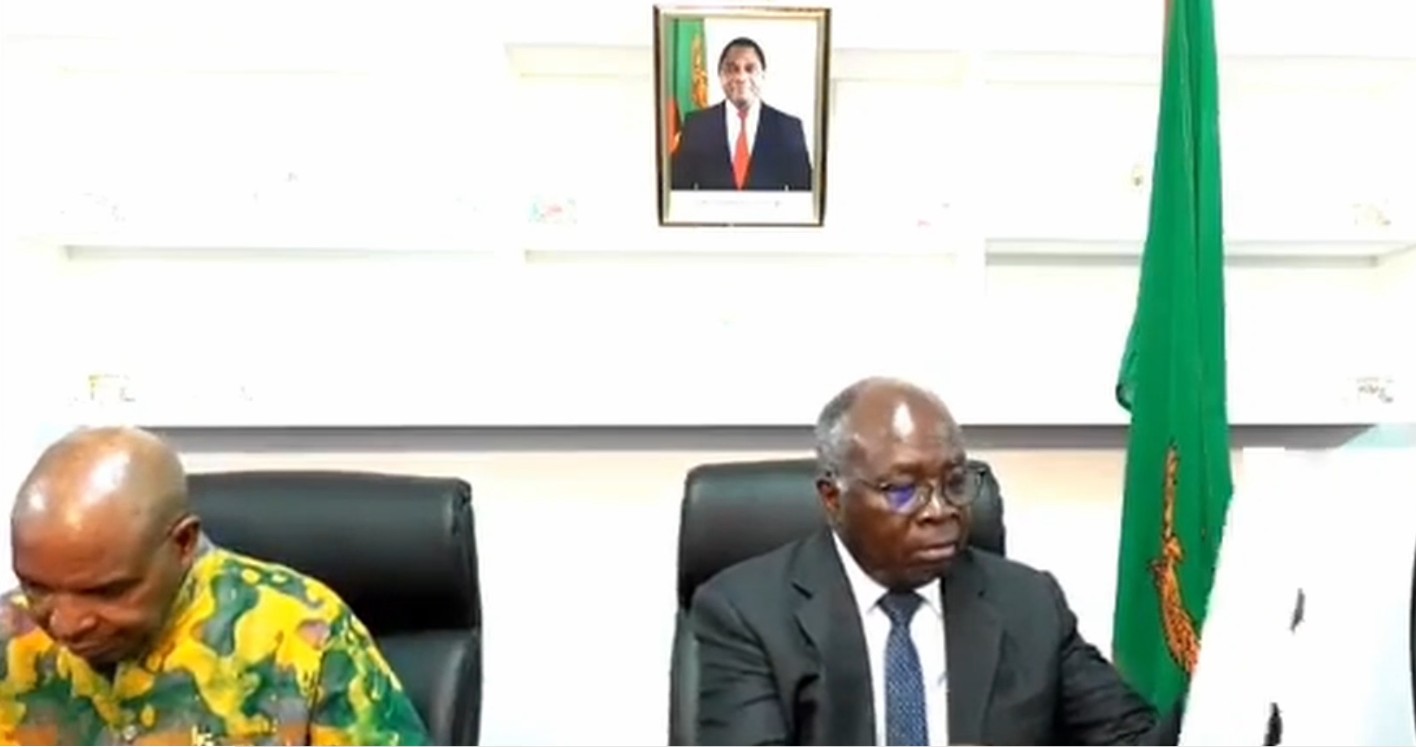
Zambia has successfully concluded its extended International Monetary Fund Credit Facility programme.
Zambia's Minister of Finance Situmbeko Musokotwane said the country will now immediately begin engagement on a successor arrangement that places stronger emphasis on economic growth, investment and job creation.
In a statement issued on Thursday, Dr. Musokotwane clarified Government's position as the country approaches the final stages of the IMF-supported programme, which began in 2022.
He confirmed that Zambia has opted not to pursue a previously envisaged one-year extension of the existing Extended Credit Facility, but to transition to a new, full-term programme aligned with evolving national priorities.
While the successor framework will continue to address the completion of Zambia's external debt restructuring, it will also accommodate broader medium-term development needs, particularly the acceleration of economic growth.
“Government's focus is now on leveraging macroeconomic stability to drive investment, expand productive capacity and create jobs. Engagement with the IMF on a successor framework will therefore prioritise growth-oriented structural reforms, value addition, investment mobilisation and inclusive economic opportunities."
Dr. Musokotwane underscored that Zambia has, since 2022, completed all programme reviews without interruption, with a staff-level agreement on the sixth and final review reached last month.
That review, he noted, is now subject to consideration and approval by the IMF Executive Board, in line with established procedures.
Zambia's performance under the programme has been exceptionally strong, with all key quantitative targets and structural benchmarks met.
This track record has underpinned macroeconomic stabilisation, including sustained fiscal consolidation, with primary fiscal surpluses exceeding two percent of the Gross Domestic Product (GDP) and strengthened confidence in public financial management.
Dr. Musokotwane said the reforms have helped restore economic stability, improve resilience to shocks and support progress on debt restructuring.
He added that the policy environment created under the programme has also enabled Zambia to benefit from favourable copper prices by reviving mining operations, noting that higher prices alone would have delivered little without increased production capacity.