


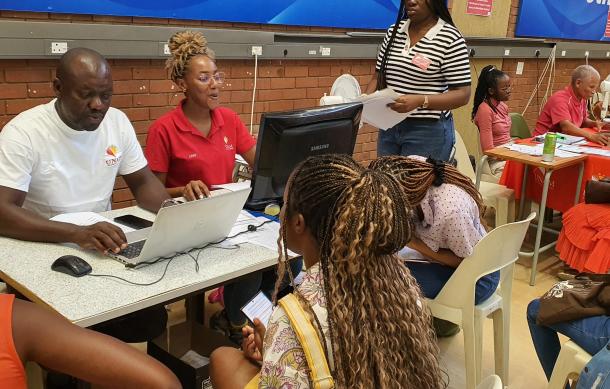
While the government's free tertiary education policy has taken off, questions remain around how it will work and whether it can truly prepare young Namibians for the job market.
Economist Wendell Aizab, in an interview with NBC News, shared his views on how best to improve on the system.
Aizab stressed that the success of Namibia's fully subsidised tertiary education policy will depend on where the government directs its support and how institutions prepare students for work.
He explained that funding should focus on priority fields such as engineering, agriculture, renewable energy, and digital skills, areas he believes are critical for national development.
“The idea is to ensure that everybody is provided an opportunity to get that primary qualification in order to actually also have decent work, which then also reduces social and economic yields as well. The quality of education will not be reduced, because the institutions still take in students that have exited with the National Senior Secondary Certificate. Although it's now provided in Grade 11, it is still that same certificate. The advanced subsidiary will then be earmarked for courses and qualifications that are generally more high numeracy, maybe the science, technology, engineering and mathematics.”
Aizab stressed the importance of work-integrated learning, saying it can help close the experience gap many young graduates face when entering the job market.
The policy should not stand alone, he emphasised, but be part of a coordinated national strategy, supported by regular consultations to identify challenges and strengthen weak areas.
Aizab described the policy as an opportunity for families, as primary qualifications are fully subsidised and no longer loans, while only non-tuition support remains repayable.
He said this shift reduces the financial burden on young people and allows more students to access higher education without starting their careers in debt.