


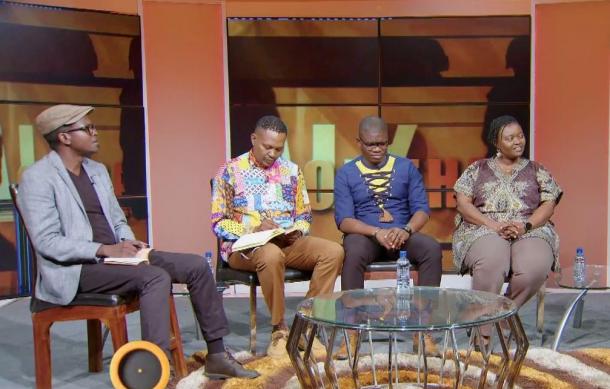
Key stakeholders in the cultural and creative industries highlighted the urgent need for commercialisation, stressing the urgency for proper prioritisation under appropriate regulatory and governing bodies.
The stakeholders made the call during NBC's Talk of the Nation programme, which looked at developing and protecting Namibia's creative economy.
The prioritisation of the creative industries as one of the seven key focus areas of the 8th Administration has set an important precedent for the formalisation, policy development, and commercialisation of the sector.
However, there is still much to do to ensure proper alignment and position the industry as commercially viable.
Creative entrepreneur Joel Haikali has highlighted some of the challenges, noting that the sector currently falls under a social ministry that already has many competing priorities.
He argued that for the creative industries to truly commercialise, the right institutional alignment is crucial, particularly with ministries responsible for trade and industry.
"If we were, for instance, to say the moment we start talking about creativity as an economic, transformative, economically speaking, then we should already consider putting it under the Ministry of Trade because there you will find individuals who are equipped and put in a position to help with the conversation around investment and everything that has to do with where we need to go."
The Arts Director in the Ministry of Arts and Culture, M'Kariko Amagulu, emphasised the need to create synergy among stakeholders.
"So I think as a ministry, what we've been doing is trying to create a lot of synergies, not only with the Ministry of International Relations, because now they are responsible for trade. So we are looking at trading services and opportunities for people to be employed remotely, seeing how we can bring them to the table."
National expert on the creative industry, Patrick Sam, stressed the need for effective strategies to grow the sector and unlock its economic potential.
"The fact is that we have Namibian talent, and they can make a livelihood and dignity out of it. I think that's the issue: how do we ensure dignity for Namibian people by using culture and creativity as the vehicle for national development, and it has to be a national resource for us to do that?"
BIPA's Acting Executive for Intellectual Property, Onesmus Joseph, addressed shortcomings in the Copyright Act, saying it no longer reflects the current needs of the industry and requires amendment to support commercialisation and the introduction of levies.
"We are saying every person who is going to import or manufacture technological devices, your cell phone, your flash disk, that is capable of storing digital content, you should at least pay a certain amount of money toward the fund. Then that money, a portion of it, should be distributed directly to the pockets of the creators."
The panellists concluded that, with the industry now formally recognised, it is up to the creatives to seize the opportunity and work in unity to grow a sector that has the potential to contribute significantly to the country's economic development.