


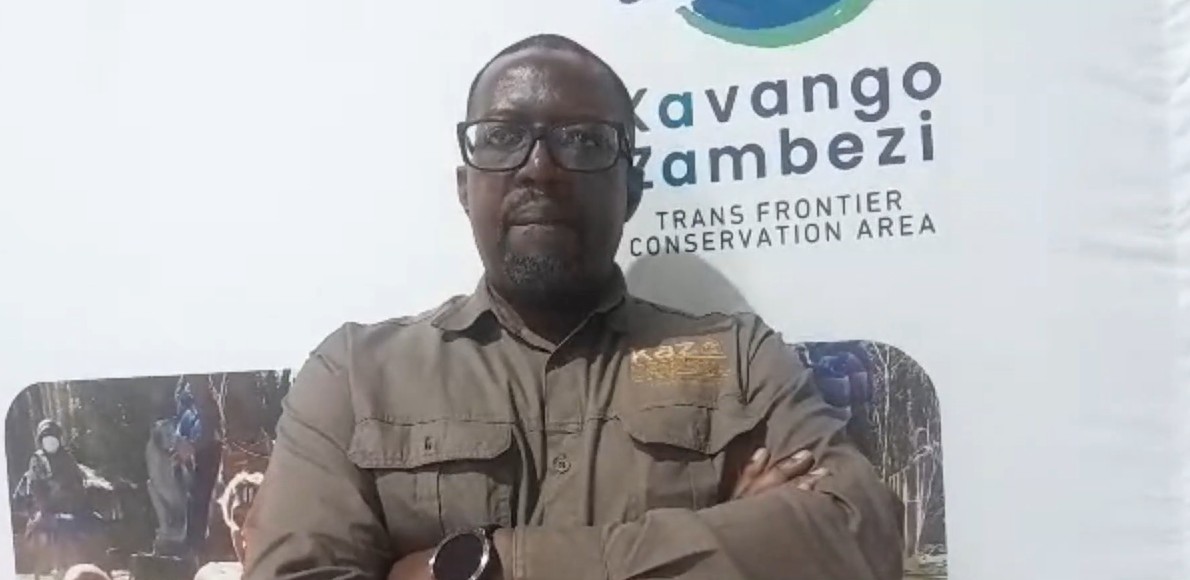
The Kavango-Zambezi Transfrontier Conservation Area (KAZA-TFCA) has commended Namibia and Botswana for their joint efforts in curbing poaching.
In June 2024, Namibia and Botswana jointly launched the Civil-Military Cooperation (CIMIC) Plan to reinforce border security and combat illegal activities like poaching.
The Kavango-Zambezi Trans-Frontier Conservation Area is the second-largest nature and landscape conservation area in the world.
Speaking to NBC News on the sidelines of the recently held tourism consultative meeting in Francistown, Botswana's second-largest city, the KAZA-TFCA Executive Director, Dr. Nyambe Nyambe, said, "The joint patrols involve scheduled patrols by law enforcement officers from the two countries being undertaken jointly in identified areas. These joint patrols can continue for an extended period. And this is essentially done to ensure that there is coordination and collaboration in law enforcement efforts and joint sharing of intelligence."
He said there are several joint projects that Namibia and Botswana are implementing with the support of KAZA-TFCA to promote both nature and landscape conservation.
Last year, a sensitisation drive that covered 27 villages in Namibia and 71 in Botswana addressed escalating cross-border issues, such as poaching, stock theft, illegal border crossings, human-wildlife conflict, and smuggling illicit goods.
According to the most recent KAZA Trans-Frontier Conservation Area survey, elephant populations are stable but with a statistically insignificant growth rate of only 1.2% per year, coupled with high carcass ratios.
KAZA-TFCA, which spans five southern African countries – Angola, Botswana, Namibia, Zambia and Zimbabwe – is home to almost 230,000 elephants, the largest stronghold of savannah elephants on earth.