

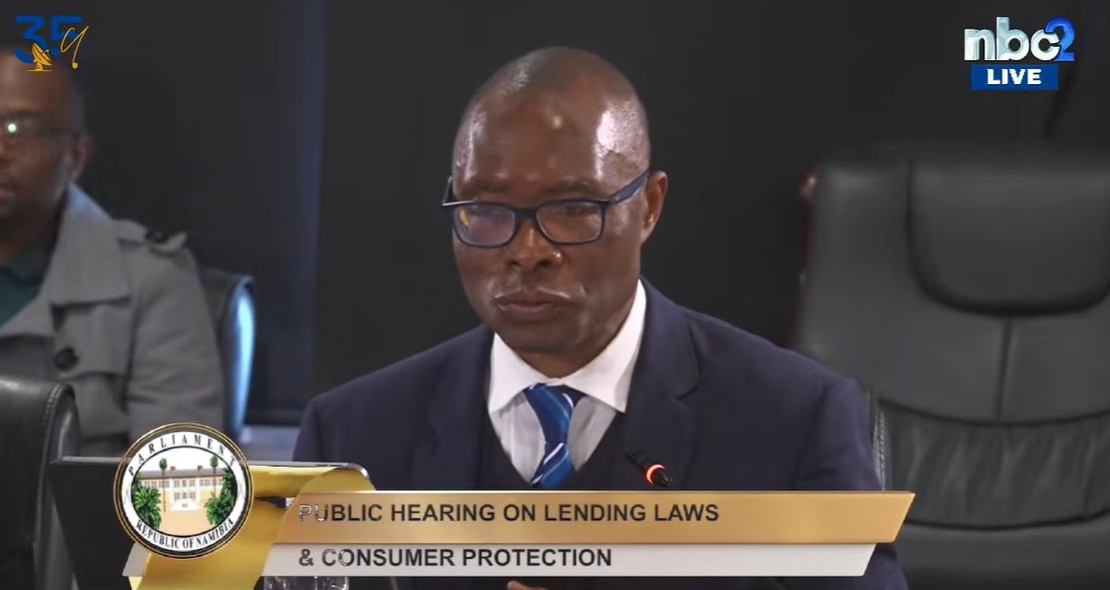
The National Assembly Parliamentary Standing Committee on Economy and Industry, Public Administration, and Planning held a public hearing on a motion looking at whether the existing laws are protecting Namibians from exploitation by lending institutions and informal money lenders.
The hearing is part of the committee's work to review issues affecting the country's economy, public administration, and planning.
Committee Chairperson Iipumbu Shiimi said the hearing follows a motion that was tabled in Parliament and aims to collect views from different stakeholders before recommendations are made to the National Assembly.
Iipumbu explained that household debt remains a serious concern, especially among civil servants, many of whom are left with very little money after loan deductions are made from their salaries.
The hearing is also looking into whether the deduction code system is adding to the problem of over-indebtedness and whether lenders who have direct access to salaries should charge lower interest rates.
"There is a high level of indebtedness, especially among civil servants. Some of them take home very low net pay because of multiple loans. We want to understand what can be done to ensure that people still take home a decent income while having access to credit,” added Shiimi.
Also joining the meeting were members from the Micro Lending Association of Namibia.
Charles Visser, a representative, seconded Iipumbu, stating that debt is a growing problem in the country and reiterating that registered micro-lenders should not be blamed for it.
He notes that registered micro-lenders operate under strict rules set by NAMFISA and the Micro Lending Act, while illegal money lenders and loan sharks operate outside the law.
Visser highlighted that most household debt is owed to commercial banks and that registered micro-lenders make up only a small share of the country's total debt.
"There are already measures in place when it comes to micro-lenders and the way they operate. If I may, I would like to cite a few examples and statistics to this committee. The micro-lenders submit that household indebtedness in Namibia is multifaceted. It cannot necessarily be attributed to a single factor or, for that matter, a single lender. Indebtedness cannot necessarily be attributed to micro-lenders alone. We respectfully submit that it should not be viewed in that way.”
The committee is expected to consult with consumer groups, financial institutions, and other stakeholders before compiling its final recommendations.
The outcome of the hearings could lead to changes aimed at better protecting people from excessive debt and unfair lending practices.