


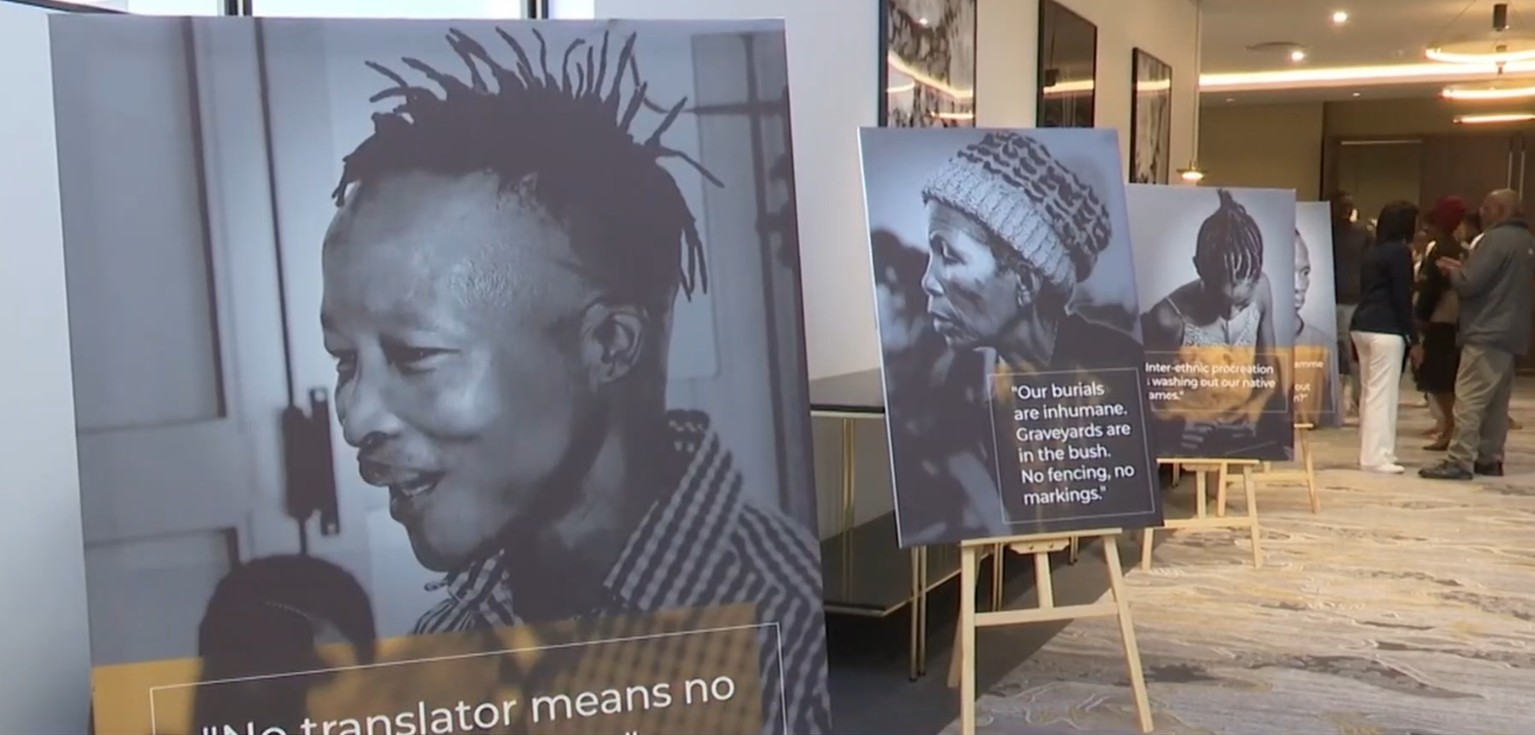
The Namibia Statistics Agency (NSA) on Wednesday launched the Marginalised Communities Report, compiled from the 2023 Population and Housing data.
The report finds the population of marginalised communities at 75,569, representing 2.5% of the country’s total population. The communities referenced are the San, Ovatue and Ovatjimba.
Children aged 0 to 17 years make up 48.2% of the marginalised population. Females account for 50.7% and males 49.3%.
Of the 75,569 people, 25,406 live in urban areas, and 50,163 live in rural areas. Regionally, Otjozondjupa has the largest population of these communities at 23,864, while the ||Kharas region has the smallest at 159.
The literacy rate among marginalised communities is 54.8%. Attendance in Early Childhood Development (ECD) programmes for children aged 0 to 5 is 11.4%, compared with 21.4% for the national population.
The state maintenance grant is the most commonly received social grant among these communities, with 5,341 recipients, followed by the old-age pension, with 3,317 recipients.
Employment figures show 9,673 people employed, while the combined number of unemployed is 17,629.
Speaking at the launch, Moses ||Khumub, Deputy Minister in the Vice President’s Office, said the report transforms raw data into knowledge that reveals realities behind the statistics and makes historically under-represented communities more visible for national planning.
Dr Kaire Mbuende, Director-General of the National Planning Commission, said the profile provides an important baseline for implementing NDP6 and tracking progress towards the Sustainable Development Goals. He urged all offices, ministries, agencies, regional councils and development partners to integrate the report’s findings into policies, plans and budgets.
Deputy Minister of Gender Equality Linda Mbwale said the figures represent real children, families and communities whose dignity and needs must inform development efforts.