


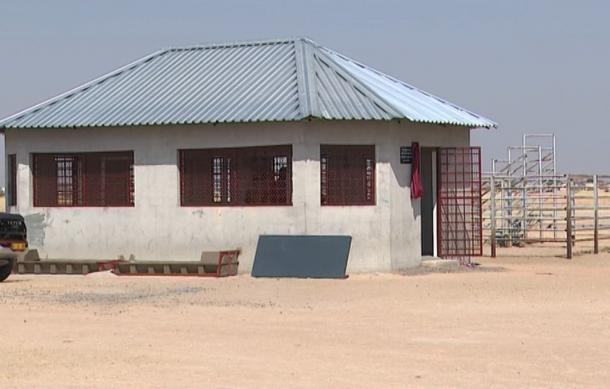
Elenga Enene of Ombalantu Traditional Authority, Oswin Mukulu, officially inaugurated a newly constructed community abattoir on Friday at Omundjalala Village in the Omusati Region.
The facility was built at a cost of N$300,000 to address a long-standing challenge where community members have for years been slaughtering livestock in open spaces, exposing meat to wind and dust.
Speaking on behalf of the Traditional Authority, spokesperson Isdor Kanelombe said the new facility is a major step towards improving livestock management and promoting the wellbeing of the community.
"The new slaughterhouse comes after years of concern over animals being slaughtered in open spaces near the water pan, where flies, dust and waste contaminated drinking water. In response, the Chief, Traditional Authority members and the Councillor agreed to build a hygienic facility for the community."
Kanelombe added that the project is built on three pillars: strict hygiene, high meat safety standards and humane animal handling, to meet market standards.
He said the facility is more than just an abattoir, as it will provide a hygienic space for meat processing while creating jobs for slaughterers and caretakers.
Omusati Governor Immanuel Shikongo commended the Ombalanhu Traditional Authority for taking the initiative to establish a facility that supports local farmers and improves livestock production.
"This initiative to establish a slaughterhouse and related facilities, including a kraal, is of utmost importance to our community. I would like to commend the Traditional Authority for taking the initiative without waiting for financial assistance from the central government. This demonstrates their commitment to supporting local farmers, particularly those who have been slaughtering their livestock in open areas."
In a speech delivered on his behalf, the appointed committee leader responsible for overseeing the abattoir, Dionisius Shikufinde, thanked the OTA for the initiative.
"Tate Shikufunde is thankful to the Chief and his entire Traditional Authority office for the good work done in bringing the slaughterhouse initiative to fruition. He also welcomes the responsibilities entrusted to the committee to oversee the slaughterhouse."
Abattoir fees are set at N$60 for cattle and donkeys and N$40 for goats, sheep, and pigs, with transport permits issued on-site for N$25