


As Namibia commemorates Heroes Day on 26 August, the country remembers those who sacrificed for its freedom.
Among them are ordinary Namibians whose contributions to the liberation struggle often remain untold.
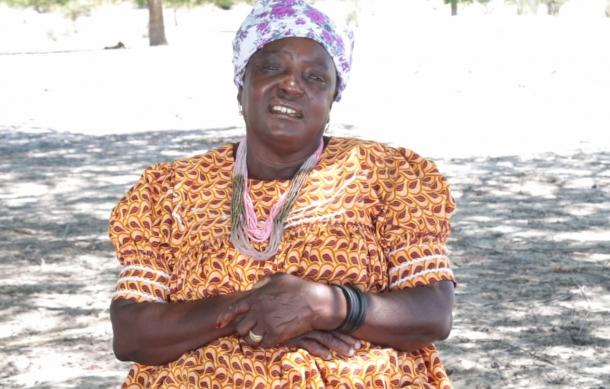
One such story is that of Albertina Ndatilaoveta Thomas, who supported People's Liberation Army of Namibia-PLAN fighters in northern Namibia during the war.
Albertina recalls preparing food and traditional drinks for the fighters and delivering food to their hidden camps, often putting her at great risk with the apartheid South African army.
For Albertina, supporting the liberation struggle was not about recognition.
It was about helping those fighting for Namibia's freedom.
"One time the South African Army found us with the PLAN fighters, and they shot at them. About four of them died that day. I remember them cutting off the PLAN fighters' ears and smearing them on our teeth to swallow the blood, and they beat us."
Her then husband, Phillipus Nghilukilwa, who was working in Walvis Bay, would occasionally visit their homestead and also supported PLAN fighters. According to Thomas, he was eventually killed because of his involvement.
She recounted how a family friend was buried upside down in the cattle kraal and how their homestead was set on fire.
The husband's death and the pursuit of the South African army to find her forced Thomas to flee her home with her four children, leaving behind a life that had been destroyed by the conflict in the Elwafa and Ohangwena Region.
"The army found my husband at the cattle kraal and shot at him, and he died, and at night I heard that they were coming for me, and I ran with my four children; we slept in the bushes. When I came to my home village, I was determined to go into exile, but my aunt warned me about my children. I was about to leave alone after the death of my husband, telling me that God will ask me to answer for them. She advised me to rather go to the southern part of the country so that I can raise them."
After fleeing, Albertina Thomas came to Arandis before moving to the southern parts of the country, where she remarried and now resides in Onekwaya West, Ogonga village.
Thomas's story highlights the often-overlooked role of women during the liberation struggle.
Many provided food, shelter, information and other forms of support to the fighters, while putting their own lives and those of their families at risk.
For Thomas, the memories remain painful, but she believes they must be preserved.
"It wasn't an easy journey; it only haunted me when I came to the southern parts of the country. I would cry a lot, thinking of the loss of my husband and everything I left behind. I then had to ask myself until when I plan to mourn; a few months went by, and the burden got lighter. It was difficult to eat or drink during that period, but as time went by, I learnt to live with it."
As Namibia honours its heroes and heroines, her story is a reminder that the struggle for freedom was not fought only by those on the battlefield.
It was also carried by mothers, wives and ordinary citizens who supported the struggle in their communities.