


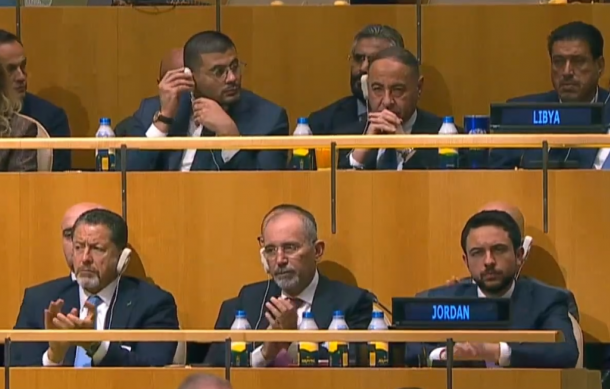
The first day of the 81st UN General Assembly General Debate exposed sharp divisions over war, artificial intelligence, migration and Africa's place in global decision-making.
The disagreements moved beyond the podium, with Iranian and Cuban delegations walking out during President Donald Trump's address.
From calls to end wars and protect civilians to arguments over national sovereignty and migration, day one of the General Debate laid bare contrasting views on how the international system should respond to a changing world.
But first, the drama was not limited to the speeches from the podium.
Iranian delegates left the chamber as United States of America's President Donald Trump turned to Iran in his address, while Cuba's delegation also walked out after Trump targeted the Cuban government.
The empty seats became a striking backdrop to a debate already characterised by deep divisions in the chamber.
UN Secretary-General António Guterres, in his final address, placed the focus on cooperation as wars, inequality and emerging technologies test the international system.
"In all our efforts, we must ensure no country is left behind. Artificial intelligence must be shaped by humanity, with humanity, and for all humanity... The fighting must stop."
President Trump offered a different position on national sovereignty, migration and the role of the United Nations.
"The United Nations has great potential. I've said that for many years, but it must stop imposing the far-left agenda of globalist bureaucrats who nobody ever elected. There is no human right to illegal immigration, but there is a right to remain a sovereign nation, and we want to remain a sovereign nation, and so should you," Trum said.
Africa's position in global decision-making once again came into focus, particularly with the consistent calls for reform of the UN Security Council.
President of the UN General Assembly Khalilur Rahman said, "Africa needs to be at the table, not on the menu. Africa cannot be asked to wait indefinitely for the rightful place on the council. Ending Africa's under-representation now is a question of fairness, justice, and ultimately, the credibility of this organisation."
The Gaza war provided another sharp point of contrast.
Jordan's King Abdullah II accused the Israeli government of continuing military operations and restricting Palestinians in Gaza.
"This Israeli government keeps moving the goalposts, continuing its attacks and destruction of civilian infrastructure, refusing to withdraw, and squeezing Palestinians into barely a third of Gaza. This can no longer be dismissed as temporary military measures or a consequence of war."