


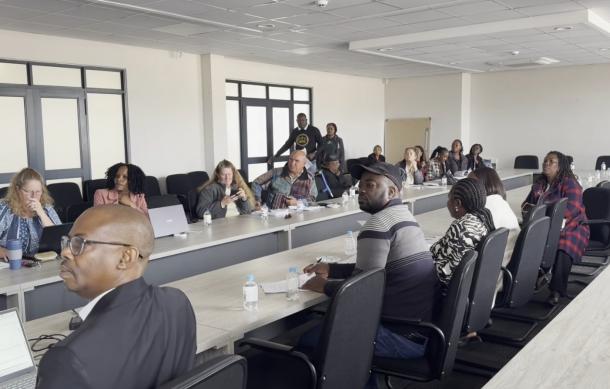
The Ministry of Environment, Forestry and Tourism has emphasised that Namibia's gambling and lottery laws need to keep pace with rapid developments in digital technology.
This came to light at a stakeholder workshop where proposed amendments to the Gambling Control and Lotteries Act and its regulations were presented for validation.
Namibia's gambling and lottery industry is changing rapidly, driven largely by digital platforms and emerging technologies.
The Deputy Executive Director in the Directorate of Parks, Tourism and Gaming, Seimy Shidute, said these developments have exposed shortcomings in the existing regulatory framework.
She noted that the Ministry has identified gaps in the current regulations and stronger enforcement mechanisms are needed to effectively regulate the industry.
The stakeholder workshop aims at validating proposed amendments to the Gambling Control and Lotteries Act and its regulations.
“The validation meeting is really an opportunity for the sector and the public to identify unintended technical errors or possible loopholes in practical compliance requirements that we, as policy and legal drafters, might have missed. It is important for us to hear your views and receive your input so that we can reach consensus before we leave Swakopmund today. Once we receive your confirmation and there are no objections, we will assume that we have reached consensus on the proposed draft."
The proposed amendments are also intended to bring Namibia's regulatory framework in line with global developments in the gambling and lottery industry.
Meanwhile, Chairperson of the Lotteries Board of Namibia, Ben Shikongo, highlighted that the industry also needs greater formalisation, particularly through licensing.
“We need to ensure that this benefits our people, and I believe the government should also expedite the process of gazetting the fees, particularly those that were previously high. These fees have now been reduced in response to the prevailing global economic situation, and Namibia is no exception. What we need now is compliance. We will travel to other regions to reaffirm and reinforce these issues. From there, we will return to Windhoek, consolidate the inputs received, and submit them to the lawmakers.”