


Members of Parliament have raised concerns regarding the effectiveness of government programmes targeting marginalised communities during their contributions to the debate on the Appropriation Bill.
For the 2025/2026 financial year, an amount of N$285,638 million has been allocated to the Division of Marginalised Communities, which falls under the Office of the Vice President.
The Division is tasked with promoting the social inclusion of marginalised groups and ensuring their integration into the mainstream economy.
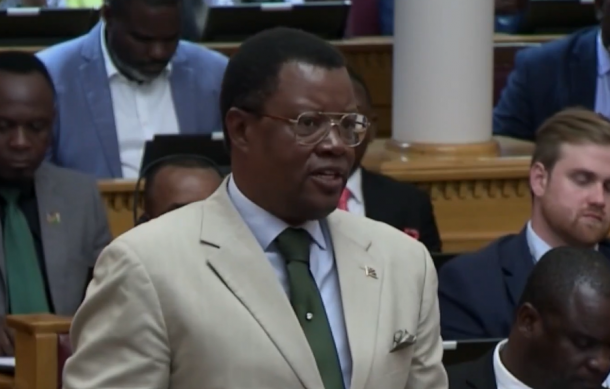
NUDO MP Vetaruhe Kandorozu said the government should increase investment in marginalised communities to improve their socio-economic status.
He pointed out that many individuals from communities such as the San, Ovatue, Ovatjimba, and Ovazemba do not progress to tertiary education due to inadequate support structures.
"The programme we have as a country for our Sans community, the Ovatue, does not elevate them from where they currently are. The only time when there was a bit of movement was during the time of the former Deputy Prime Minister Libertina Amadhila, and after she retired, the whole programme collapsed."
Kandorozu added that existing programmes are not sufficiently uplifting these communities and proposed the establishment of a comprehensive initiative to help them complete school and reach their full potential.
PDM leader McHenry Venaani also weighed in, expressing concern that current interventions are not yielding tangible improvements.
He called for new innovative approaches, arguing that previous efforts have failed to bring about meaningful change.
"I think the office of the president, being the main office that is running the country, should do something very different. For example, San community members, with all due respect to them. Their children go to school; the government has programmes to put them in school, but the parents cannot take their children in long weekends, and then the children drop out of school. Something else must be devised to address the applied."
AR leader Job Amupanda questioned the existence of two funding mechanisms under the Office of the President and the Ministry of Education to support students from marginalised backgrounds.
"We have free education now; why do we have an NSFAF in the office of the president and NSFAF under honourable Steenkamp? What is going on there? These are all students; these ones are special. Yes, we call them a particular category. Is that if we have N$11 million that we have there under the office of the president? That N$11 million must go to the Ministry of Education."
He argued that all students should be funded through a single, centralised system, suggesting that funds allocated through the presidency should be redirected to the Ministry of Education for better coordination and impact.
Prime Minister Ellijah Ngurare explained the government wants to see a positive impact in the community they are investing in and that the community appreciates their efforts.
"I don't think there is a disagreement on that we want to see impact in what we are investing in that particular programme. I think we are firmly aware that it is better that whatever investment we are making is felt by themselves and appreciated by themselves."