


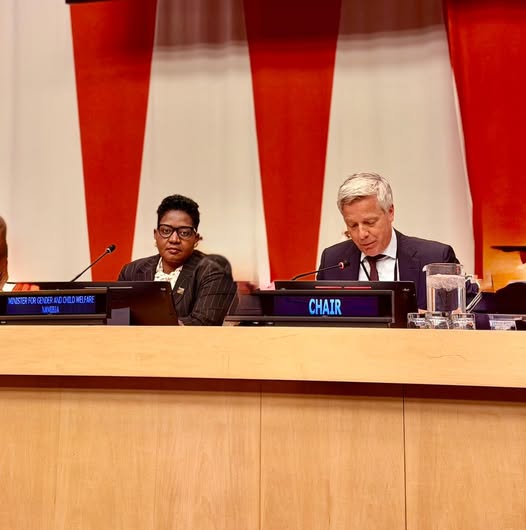
Namibia has been recognised for its leadership in advancing the Women, Peace and Security (WPS) agenda at the United Nations in New York, marking 25 years since the adoption of UN Security Council Resolution 1325.
Minister of Gender Equality and Child Welfare Emma Kantema represented Namibia and delivered a statement on behalf of President Netumbo Nandi-Ndaitwah, reaffirming the country's commitment to gender equality and the active participation of women in peacebuilding.
"The legacy of Resolution 1325 is, therefore, not Namibia's alone. It is a shared success of the global community, built on solidarity, inclusion, and the unwavering belief that peace must include women's direct involvement. As the minister responsible for gender equality and women's empowerment, I am particularly reminded that the Women, Peace, and Security Agenda is, at its heart, an agenda for gender equality, human rights, and social transformation. It urges us to view peace and security not only through political and military perspectives but also through the realities faced by women and girls: their safety, access to justice and participation in decision-making."
Dr. Kantema highlighted Namibia's ongoing efforts through the Third National Gender Equality and Equity Policy of 2025-2035 and the National Action Plan on Women, Peace and Security of 2019-2024, which is currently under review. She said these frameworks aim to strengthen women's roles in conflict resolution, peacebuilding and disaster management.
"Despite the proliferation of conflicts and crises and the worrying rollback of women's rights and gender equality around the world, Resolution 1325 continues to stand as a beacon of hope. It reminds us that peace is more durable and societies are more resilient when women are not on the sidelines but at the table leading, negotiating, mediating and rebuilding."
The speakers at the event praised Namibia for translating global commitments into action, hosting the Windhoek+25 Silver Anniversary and demonstrating that women's leadership is essential for sustainable peace. They also highlighted persistent challenges, including funding shortfalls, exclusion of women from formal peace processes and the impact of conflicts on women worldwide.
UN General Assembly President Annalena Baerbock noted Namibia’s partnerships with civil society and UN institutions as setting global standards; UN Deputy Secretary-General Amina Mohammed praised Namibia’s courage and ongoing legacy; and UN Women Executive Director Sima Bahous commended Namibia for demonstrating leadership, accountability, and impactful action for women and girls worldwide.