


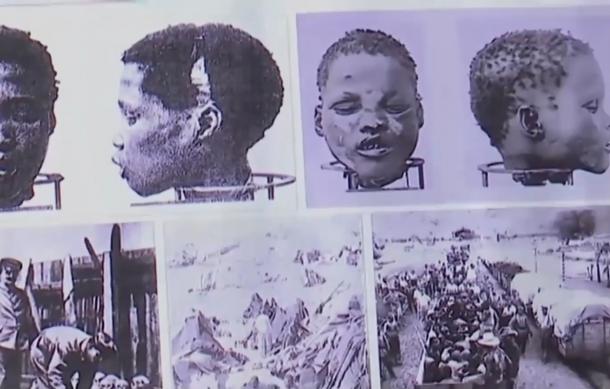
A ruling by a full bench of the Windhoek High Court has shifted the trajectory of the legal fight over the 2021 Namibia-Germany joint declaration on the 1904-08 Ovaherero and Nama genocide.
The court has decided not to add Germany as a respondent in the case, at least for the time being.
The bench also declined an application to serve Namibian court documents on the German state in Germany, citing that country's sovereignty as a reason for falling outside the court's jurisdiction.
The court has, however, ordered that 24 Namibian traditional authorities be added as parties to the dispute.
These authorities were not part of the original applicant group.
The ongoing case was launched by Landless People's Movement leader Bernadus Swartbooi and the Ovaherero Traditional Authority.
They asked the High Court to set aside former National Assembly speaker Peter Katjavivi's decision to record the joint declaration under parliamentary procedures.
They also want the joint declaration declared unlawful, arguing that it was never ratified by the National Assembly and that it conflicts with the Constitution, a 2006 genocide motion, and international law.
But the court noted that the 2021 joint declaration signed by Namibia and Germany is not a final instrument.
The declaration includes Germany's acknowledgement of responsibility for the events of 1904–1908, as well as its classification of those events as genocide from a contemporary historical viewpoint.
Under the declaration, Germany committed to providing about N$21.9 billion in development cooperation over 30 years for projects linked to reconstruction and development.
The applicants argue that this offer does not constitute reparations for the genocide.
Deputy Judge President Hannelie Prinsloo and Judge Orben Sibeya heard arguments in October and earlier this month alongside De Jager.