


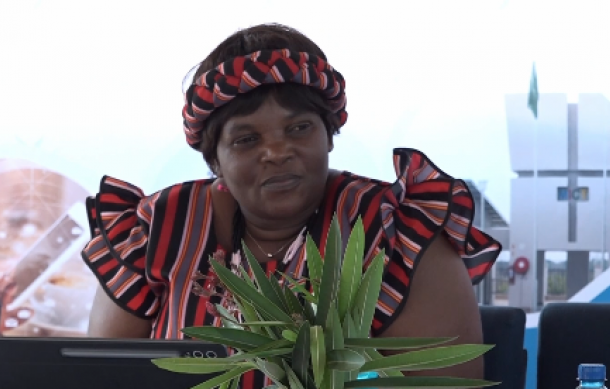
Deputy Minister of Agriculture, Fisheries, Water and Land Reform, Ruthy Masake, called on young people in the Omusati region to take leadership roles in productive sectors by becoming entrepreneurs. Speaking during a youth engagement session in the Otamanzi constituency, Masake encouraged youth to participate actively in agricultural projects to promote economic growth, wealth creation, food security, and national pride.
Under Namibia’s Sixth National Development Plan (NDP6), agriculture, fisheries, water, and natural resources are prioritized sectors for employment, food security, and export growth, especially for youth.
Masake stated: “NDP6 calls on us to shift decisively from subsistence to commercial and climate-smart production, champion youth-led agribusiness, agro-processing and value addition, build robust value chains from soil and water to markets and export, ensure Land reform delivers genuine productivity, income and generational wealth.”
She noted that the vision is reinforced by the Swapo Party manifesto implementation plan, which commits the government to expanding youth access to land, water, affordable finance, and practical skills.
“We are working to make agriculture and fisheries attractive, profitable, modern and future-proof for young Namibians,” Masake added.
She urged youth in Omusati to utilize existing water catchment systems in Oshanas to create seasonal irrigation crop production projects. She also highlighted the potential for aquaculture, water harvesting, fodder production, and pasture development to support livestock year-round.
“Government continues to invest in water infrastructure including pipelines, earth dams and boreholes in this region. Youth must position themselves around these water corridors to build productive, efficient water use enterprises,” she said.
Masake emphasized agriculture’s importance, noting it underpins more than 70% of households in Omusati. She encouraged youth-led projects focusing on improved mahangu cultivation using certified seeds, conservation agriculture practices, poultry, small stock production, horticulture, agro-processing, and livestock improvement.