Namibia tightens FMD controls amid Southern Africa outbreaks
Breadcrumb
Namibia is intensifying efforts to safeguard its internationally recognised foot-and-mouth disease (FMD)-free zone following rising outbreaks in the Southern African region.
Heavy rains and floodwaters are threatening food security for some farmers in the Mbilajwe and Batubaja areas in the Zambezi Region.
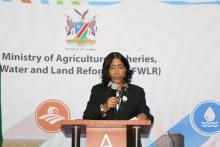
Minister of Agriculture, Fisheries, Water and Land Reform (MAFWLR), Inge Zaamwani, says despite Namibia's status as a Foot and Mouth Disease free (FMD) zone, developments in neighbouring countries necessitate heightened surveillance and vigilance.
The Agriculture, Fisheries, Water and Land Reform Minister Inge Zaamwani has launched a N$46-million food security and climate resilience grant in Otjiwarongo.
The Agriculture, Fisheries, Water and Land Reform Deputy Minister says Namibia's agricultural future depends entirely on the hands, hearts and minds of young people.
She made these remarks at Oniipa in the Oshikoto region during the agri-youth engagement.
The Katima Mulilo Correctional Facility has taken a major step towards agricultural self-sufficiency with the installation of a modern centre pivot irrigation and reticulation system at its old Wenela farm.
The Ministry of Agriculture, Fisheries, Water and Land Reform has clarified that the 2026 Total Allowable Catch for horse mackerel was determined through a statutory, consultative and science-based process.
The ministry's explanation follows claims of secretive quota cuts.
Drought conditions and the absence of locally produced fish feed continue to hamper the aquaculture sector.
A fish farmer in the Musanga area of the Zambezi Region is appealing to the Ministry of Agriculture, Fisheries, Water, and Land Reform to reinstate the procurement of fish feed.
A subsistence farmer in the Kavango West Region's Kaguni village, Domingo Ndara, has been left hopeless after locusts invaded his crop field.
Ndara planted mahangu, beans, maize, and groundnuts; however, from 21 December, he began to notice locusts in the crop field.