


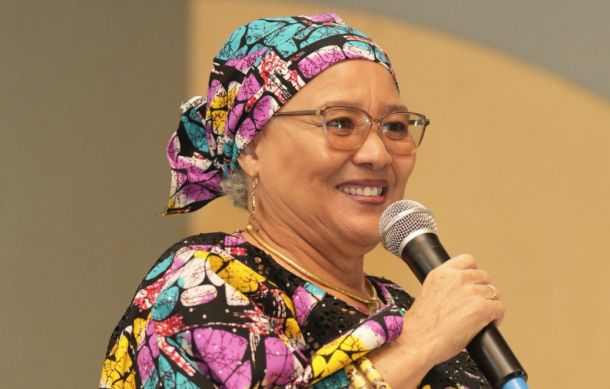
Vice President Lucia Witbooi has reiterated the government's commitment to supporting initiatives that promote the culture and tradition of the Namibian people, such as the Omagongo Festival.
Speaking at a fundraising gala dinner for the Omagongo Festival in Windhoek, Witbooi called on traditional leaders, the private sector, state-owned enterprises, development partners, and community members to continue supporting these initiatives.
UNESCO recognised omagongo-making as an Intangible Cultural Heritage of Humanity in 2015.
The Omagongo Festival celebrates a traditional fermented beverage made from marula fruit.
However, its meaning extends far beyond just a drink itself.
The drink represents a community, hospitality, respect for elders, and the transfer of knowledge from one generation to another.
"In this spirit, the Omagongo Festival reminds us that our communities have always possessed systems of social cohesion, order, generosity and mutual care. Long before modern development frameworks, our people understood that no society can prosper where there is no respect, no unity, and no sense of belonging," said Witbooi.
Historically, the Omagongo season is described as one of peace, sharing, and hospitality, as it was a time when families and communities came together, visitors were welcomed, and strangers became guests.
"The Omagongo Festival must therefore remain a living platform of cultural education. It must continue to bring together elders, youth, women, men, traditional authorities, government, the private sector, development partners, and communities from across our fourteen regions."
This year, the Omagongo Festival will be hosted by the Uukwambi Traditional Authority at Onamega on the 23rd of May.
"Over the years, this festival has grown and been recognised internationally, meaning it's no longer just a cultural festival for a particular tribe; it now belongs to the whole of Namibia, and it is for the whole nation now, like we are gathered here," said Herman Iipumbu, Omukwaniilwa of the Uukwambi Traditional Authority.
He added that hosting a festival of this magnitude requires effective preparation, coordination, logistics, hospitality, security, cultural programming, and financial resources. It requires the active support of all who understand that cultural preservation cannot be left to traditional authorities alone."