


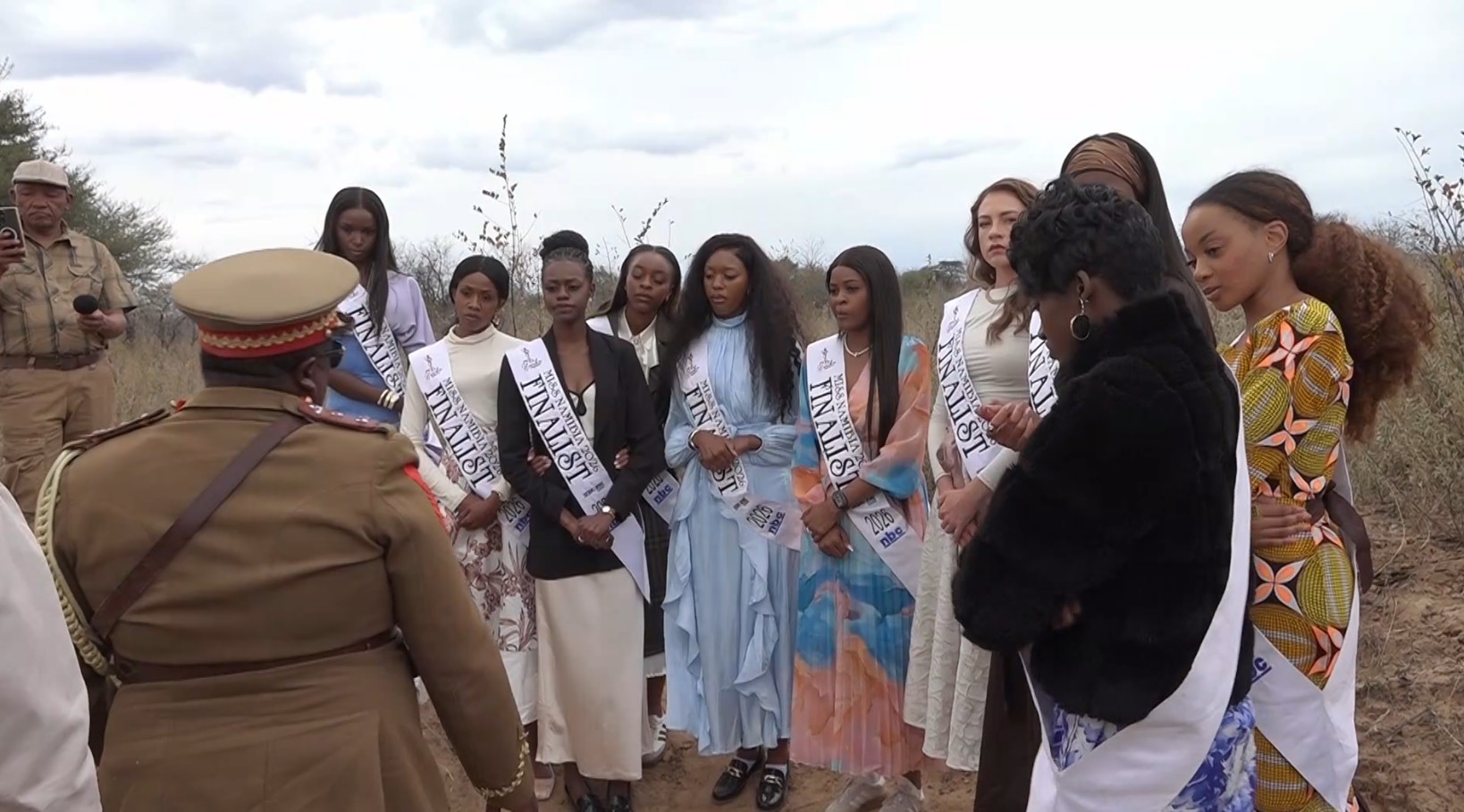
As Namibia prepares to commemorate Genocide Remembrance Day this week, the Miss Namibia Top 10 finalists took time during their Omaheke Region tour to connect with a painful but important part of the country's history.
The finalists visited Otjinene, where they were taken to the historic tree called "omuti ngauzepo", one of the sites where Ovaherero people were hanged during the genocide era.
Standing at such a sacred and emotional place gave the contestants a deeper understanding of the suffering, resilience and strength of the Ovaherero community.
Former Otjinene Councillor Erwin Katjizeu explained that "we are at Ozombuzovindimba, the infamous hill where the infamous extermination order was given by General Lothar von Trotha during the 1904-1908 genocide of the Ovahereros, and we started from 'omuti ngauzepo', meaning 'remove this tree' because people would rather not be reminded of the atrocities that were done by Germans; that's why they call it 'omuti ngauzepo'."
He further explained that Ozombuzovindimba is the location where German troops poisoned the water wells that the Hereros fled to in search of water for themselves and their animals. However, upon drinking this contaminated water, they developed sores, leading to the deaths of many at Ozombuzovindimba.
The visit was a powerful reminder of the importance of remembering the past and honouring those who lost their lives.
The journey then continued to Ombujovindimba, where the finalists visited the hill on which German General von Trotha issued the infamous extermination order against the Ovaherero people.
"This is the hill where von Trotha stood and gave the extermination order, saying, 'Kill all the Hereros, be they women, men or soldiers, whether armed or not. Kill them.' And then the Hereros fled deep into Botswana, and many of them, more than half of them, died here because of the poisoned water," said Katjizeu.
Being at the exact location where such a devastating chapter of Namibian history unfolded was both emotional and educational for the finalists, as they reflected on the pain endured by the Ovaherero community during that period.
The experience not only exposed the finalists to the rich cultural and historical heritage of the Omaheke Region but also reminded them of the importance of unity, remembrance and preserving Namibia's history for future generations.