


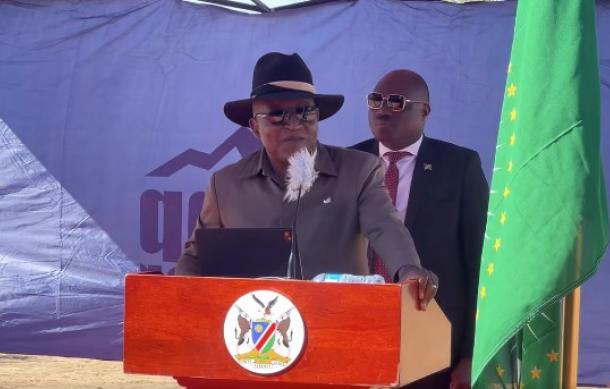
Prime Minister Elijah Ngurare has described how the Ozombuzovindimba heritage site in Otjinene Constituency carries a vast and unforgettable history of what transpired during the war of 1904–1908.
The Prime Minister remarked that Ozombuzovindimba occupies a permanent place in the history of Namibia because it was here, on the 2nd of October 1904, that General Lothar von Trotha issued the first extermination order against the OvaHerero people and, on the 22nd of April 1905, issued another extermination order against the Nama people.
These actions resulted in more than 100,000 Ovaherero and Nama people being killed by the German colonial forces.
"We must continue to preserve historical truth, promote justice and national reconciliation, and strengthen our collective commitment to nation-building and social cohesion. This Day serves as a unifying platform for all Namibians to deepen our shared understanding of the painful experiences that shaped our history while reaffirming our common aspiration to build a peaceful, inclusive, and prosperous Namibia. As we preserve the memory of these atrocities, we must also encourage continued academic research, documentation, and publication on this dark chapter of our history."
The prime minister said the best way to honour those who sacrificed their lives is to uphold the values they fought for.
On his part, the regional governor of Omaheke, Pijoo Nganate, pointed out that the genocide of 1904 to 1908 was one of the darkest stains on human history, as thousands were driven into the waterless Omaheke sandveld.
Nganate said that today, all Namibians share this pain, not just the Ovaherero and Nama.
"We also remember how survivors fled across the Kalahari into Botswana, where solidarity and sanctuary were found. And we recall how Chief Kahimemua brought the genocide into Parliament, ensuring that it became not just a regional memory but a national truth. This struggle, once borne by a few, is now a collective responsibility for all Namibians."
The Omaheke Region was joined by Khomas and Kavango East in remembering those who died during that period.