


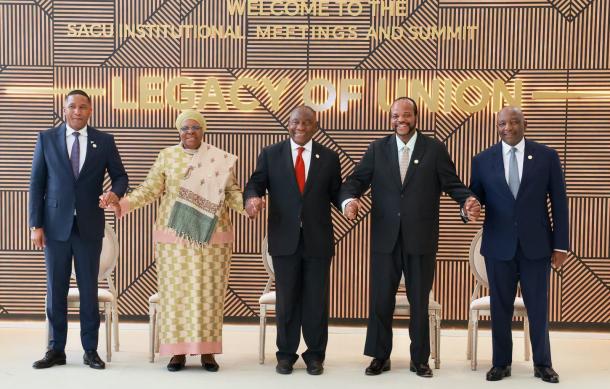
Rising global tensions and oil prices have pushed Southern African Customs Union (SACU) leaders to rethink the future of the world's oldest customs union.
President Netumbo Nandi-Ndaitwah said, therefore, the 9th SACU summit in Cape Town examined how conflicts beyond the region are disrupting trade across member states.
The President spoke to NBC News upon arrival from South Africa about some of the remedial measures.
"We looked at the current geopolitics, particularly its impact on the SACU member states. Definitely, there's a disruption to trade. There's no doubt about that. Particularly with the war, which is between Iran, the Americans, and Israel. This situation has a significant impact because the price of oil has increased, affecting all aspects of trade since everything relies on transportation. You need transport for everything."
And those are but some of the reasons which prompted Nandi-Ndaitwah and other SACU leaders to agree on the re-imagined roadmap for the world's oldest customs union, to be completed by 2027.
In the meantime, long-delayed plans to establish a regional industrialisation fund have been unlocked with an initial capital injection of US$5 billion.
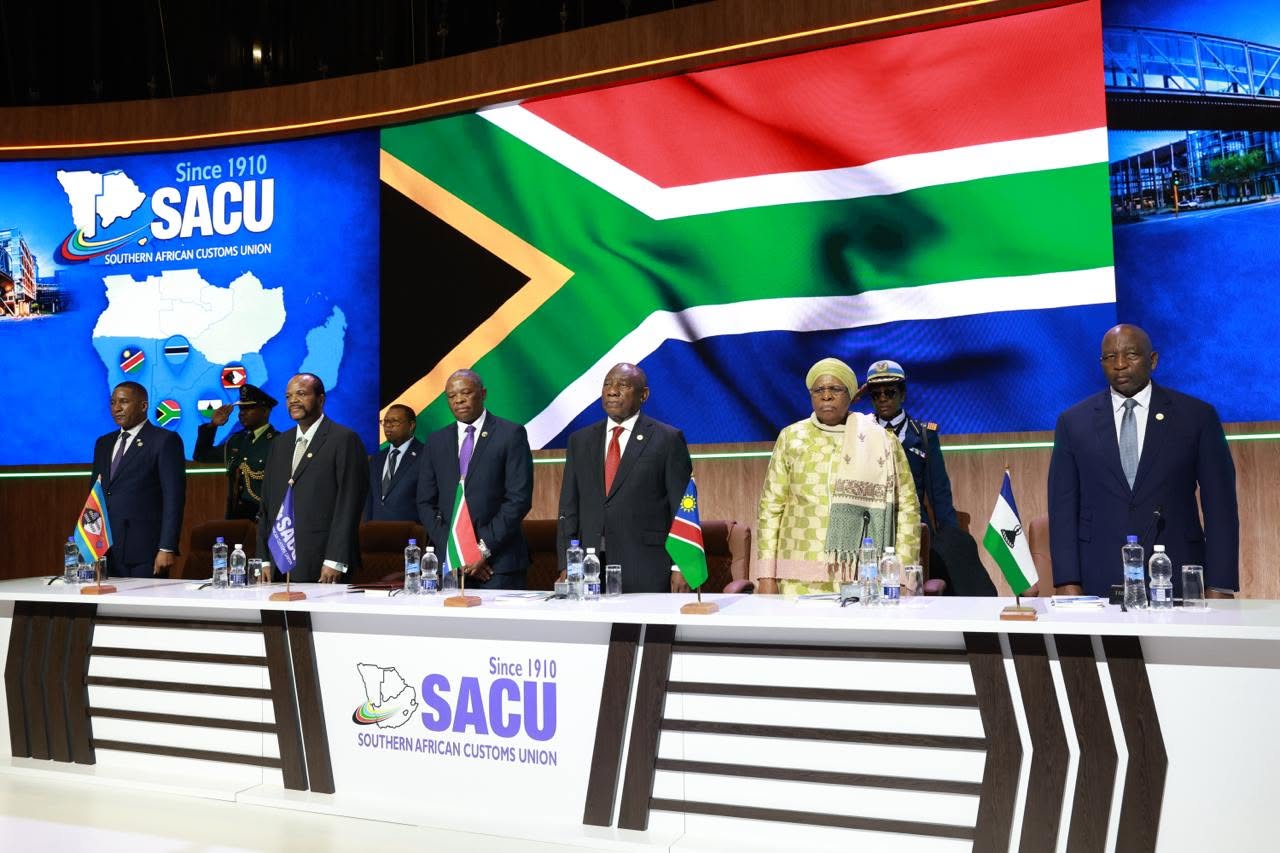
Part of the SACU's revenue pool would finance the fund, while technical teams would develop its governance structure, management framework, funding model, and access criteria for the five-member bloc.
"Another important thing: we also looked at the implementation of the SACU strategy. You know that the SACU strategy is based on five pillars. Pillar number one is industrialisation, exporting, and investment. This pillar focuses on value addition. As SACU member states, we have a lot of resources, which present us with the opportunity to add value. And then another important element is resource mobilisation."
SACU is also pursuing wider market access to enhance regional integration, which includes reviewing progress on the Common Market for Eastern and Southern Africa, the East African Community, and the SADC Tripartite Free Trade Area during the summit.
Figures from the SACU Statistical Database revealed that the regional economy continued to grow in 2024, with gross domestic product reaching an estimated US$8 trillion, up from US$7.74 trillion in 2023.
The 4.4% expansion was driven by manufacturing, mining and financial services.