


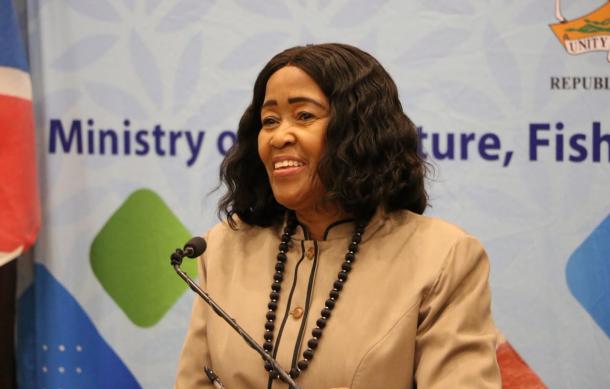
The Minister of Agriculture, Fisheries, Water, and Land Reform, Inge Zaamwani, has launched the revised National Resettlement Policy for the period 2023 to 2033 in Windhoek.
Zaamwani described the launch of the revised policy as a milestone in the country's land reform programme.
She also said the policy reaffirms the government's commitment to addressing historical land inequalities and promoting equitable access to land for national development.
Zamwaani further emphasised that land remains central to Namibia's history, identity, and livelihoods, and the resettlement programme continues to play a critical role in promoting social justice, reconciliation, and inclusive growth.
"Land has always been at the centre of our history as Namibians. Beyond agricultural production, land also represents identity, heritage, belonging and livelihood."
She stressed that the revised policy builds on the 2001 framework, incorporating lessons learned over the years, while responding to new challenges such as climate change, rising demand for land, youth unemployment, and the need to improve agricultural productivity.
"The revised National Resettlement Policy, therefore, responds directly to these challenges. The policy serves as a strategic framework through which government, together with key stakeholders, can address the issues of efficiency, equity, transparency, tenure security and agricultural production."
Zamwaani said the focus of the policy is to promote productive and sustainable farming, ensuring that resettled beneficiaries are able to build sustainable livelihoods, contribute to food security, and create employment opportunities.
She also says the policy is aligned with Namibia's Sixth National Development Plan, focusing on poverty reduction, economic growth, job creation, and sustainable resource management.
"A successful resettlement programme cannot simply be measured by the number of farms allocated; its true success lies in whether the resettled families can build sustainable livelihoods, contribute to national food security as well as create employment for themselves and their families."