


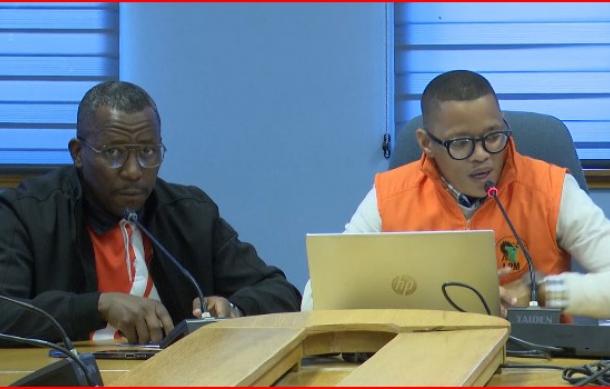
The Landless Peoples Movement (LPM) expressed concern over the humanitarian and socio-economic crisis in Cuba.
The party highlighted issues of food insecurity, medicine shortages and civil rights repression.
Speaking during a press conference, operative secretary of LPM Dawid ≠Eigub said LPM stands in solidarity with the people of Cuba and stressed the importance of accountability for human rights violations.
"Our solidarity is unequivocally with the people of Cuba, not with any political establishment. Every nation has the sovereign right to determine its political future, but sovereignty can never be invoked as a shield against accountability for persistent violations of fundamental human rights and democratic freedoms. Human rights are universal, indivisible, and non-negotiable. They are not subject to ideological preference, historical alliances, or geopolitical convenience."
However, the party criticised Namibia's foreign policy for its inconsistency in addressing human rights violations, particularly in some African countries.
"We have said we are not going to support inconsistently applied foreign policy. Whenever other countries, which you perceive as your allies, do it, you agree, and you are quiet. And when other countries apply it, you are quiet. So we question this friend of all, so-called friend of all, enemy to the non-foreign policy of the state that is applied in a very inconsistent way. History reminds us that governments exist to preserve their people, not the other way around. Political loyalty must never supersede human dignity".
The party further called for reforms to enhance transparency, accountability and electoral integrity in the Electoral Commission of Namibia.
The party proposed continuous observation during voting, allowing polling agents to use mobile phones, inspecting polling stations before elections and using national identification cards for voter identification.
Ivan Skrywer, the political czar at LPM, adds, "As citizens, we must move away from being obedient citizens to active citizens. Those questions. Because at the end of the day we are the border forces of our country. We must organise ourselves. We must really start to ask critical questions when it comes to electoral commissions and the electoral space when it comes to Africa."