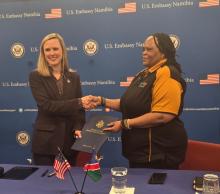
Chevron, Palms for Life Partner to tackle food insecurity in Namibia
Breadcrumb
US petroleum company Chevron and the non-profit Palms for Life have signed a Memorandum of Understanding aimed at curbing food insecurity and malnutrition in Namibia.
An estimated 60 million citizens in SADC were food insecure in 2024, representing 17% of the region's population.
This data was revealed by the SADC Executive Secretary, Elias Magosi, who said the situation calls for urgency in agricultural transformation and investments in the sector.
Swapo Party Vice President and President-elect, Netumbo Nandi-Ndaitwah, reminded members of the party's central committee of their duty to serve the people.
The United Nations World Food Programme, through funding by the Government of the Republic of Korea, has launched a commodity voucher programme worth 500 thousand US dollars to assist 25,500 drought-affected families and 3,500 children.
Recurrent drought and locust outbreaks continue to impact smallholder farmers with agriculture-based livelihoods, making them vulnerable to food insecurity and undernutrition.
Swapo Party Vice President Netumbo Nandi-Ndaitwah called for concerted efforts to mitigate the drought situation experienced in some parts of the country due to low rainfall.
A number of people in Namibia are expected to experience food insecurity. The Kavango East Region alone fears for the livelihoods of about 15 000 households.
The youth have appealed to the government, development partners, and the private sector to redouble their efforts in enhancing food security and ensuring responsible utilisation of resources.
Deputy Prime Minister Netumbo Nandi-Ndaitwah has called on communal farmers to commercialise the farming industry by transforming peasant farming into profit-oriented farming in order to contribute to and boost the country's economy.
The global weather predictions are forecasting the return of the adverse climatic phenomenon, El Nino, as of June.
A media statement by the Food and Agricultural Organisation (FAO) says these forecasted extreme weather events pose a high risk to world food security.