


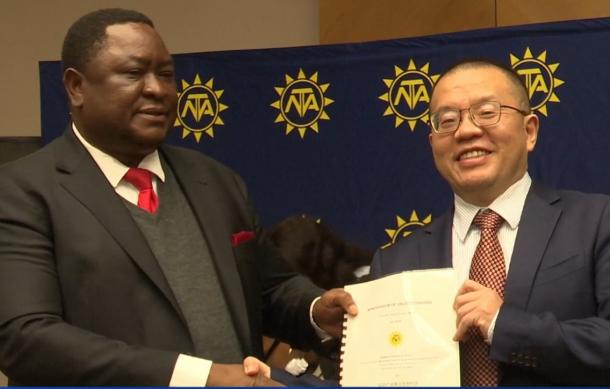
Namibia, through the Namibia Training Authority, signed a Memorandum of Understanding (MoU) with China and South Africa to collaborate on Technical and Vocational Education and Training (TVET).
The agreement will allow the three countries to exchange students and staff between their institutions over the next five years.
The Namibia Training Authority's (NTA) Chief Executive Officer, Erick Nenghwanya, said the agreement will help upgrade TVET lecturers' skills, introduce advanced technology and promote skills exchange with other institutions.
"We are in the process of transforming TVET, and we need more partners so that we can exchange knowledge and skills transfer. We are aiming at upskilling the teachers in the TVET College. We are aiming at advanced technology and also sharing of resources such as human resources and exchange of trainers. And we are also looking at where we can provide the skills in-house here. We want to make sure that we send these people to go and learn skills, either at the Orbit College in South Africa or in China."
He says the agreement will help create jobs, meet industry needs, and develop a skilled workforce in Namibia.
Principal of Orbit College in South Africa Dika Mokoena highlighted the importance of the agreement.
"The greatest reason for the signing of the MoU is for talent cultivation, where one country is in one area where they are strong with certain knowledge, and then they take that knowledge to another country, whether we take it to China or they take it to South Africa. That's the significance of the MoU to cultivate knowledge, especially for the youth."
The president of Nanjing Xinyada IT, Zeng Botao, also stressed the importance of the agreement.
"Our company vision is to enable everyone the chance to have a job ability, and so we provide and empower the young to increase their ability to master the skills and make it easy for them to find jobs and to take care of their families."
The MoU goes beyond an agreement between the three countries, as it aims to equip young people with skills, create jobs, and empower them to find or even create employment opportunities for others.
The five-year agreement has a strong focus on the areas of artificial intelligence, robotics and mechatronics.