


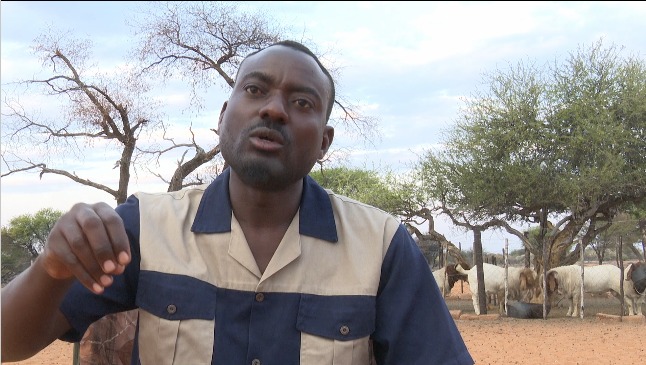
A young farmer in the Aminuis Constituency, Richard Kavari, has managed to produce quality stud animals, despite practicing in a communal area.
Stud farming has been a vital economic lifeline for him and his family.
Narrating the challenges of farming in communal areas as a registered stud breeder, Kavari said it is not easy to keep stud livestock in such areas, where grazing cannot be controlled, affecting livestock breeding plans.
“Open grazing is a big problem. You have all this quality livestock, and if you are not dedicated to the people helping you, whom some people refer to as workers, as I am also one of them, we become the camp. For commercial farmers, they have camps or fenced-off areas where livestock can be kept. But here, in communal areas, there are no legally designated camps. It is simply an agreement within the village. Camps are prohibited in communal areas. So, my question is: How do you maintain all this quality livestock without having a small camp where you can keep them and separate them from the others?”
Kavari said maintaining stud livestock is a costly exercise, but he prefers to keep it more natural in terms of fodder provision
He encouraged fellow young people in the area to produce quality livestock, as agriculture remains one of the key sectors that contribute heavily to the country's economy.
“One thing that I need to caution my fellow young people about is that farming is not a sector for someone looking for quick cash. You need discipline, and you need to be patient when it comes to finances. If you are used to having a lot of money in your bank account all the time, be careful, because you might affect your numbers. Just as it is with wildlife, with livestock, you also need to maintain what we call a minimum viable population.”