

For more than a century, the Windhoek Industrial and Agricultural Show has reflected the changing face of Namibia's agricultural, commercial and industrial sectors.
In the following insert, Business Today's Timo Andreas looks at the history of the Windhoek Industrial and Agricultural Show.
For 127 years, the Windhoek Show has brought together agriculture, businesses, industries and the public.
The story began in June 1899, when the first Windhoek Agricultural Show was held in what was then German South-West Africa with 22 exhibitors.
Farmers from Klein Windhoek displayed products ranging from fresh produce to wine, while the livestock component featured horses, cattle and small stock.
The second show followed in 1902, with further exhibitions held in 1910, 1913 and 1914 before interruption by the First World War.
The exhibition returned during the South African administration in 1930 and 1934, and plans were made to develop a dedicated piece of land, what is today known as showgrounds, including a large exhibition hall.
The modern foundation of the present-day Showgrounds is traced to 1954, when the exhibition returned after another lengthy break and the show was no longer just about agriculture.
An industrial component was introduced, initially centred largely on businesses supplying farmers, before expanding to represent a much broader industrial and commercial sector.
By 1966, about 27,000 people attended the show; from then on, it became an annual event, evolving alongside Namibia's economy and becoming a meeting point for producers, businesses, government institutions and consumers.
Today, the Showgrounds provide about 7,000 square metres of indoor exhibition space and around 35,000 square metres outdoors.
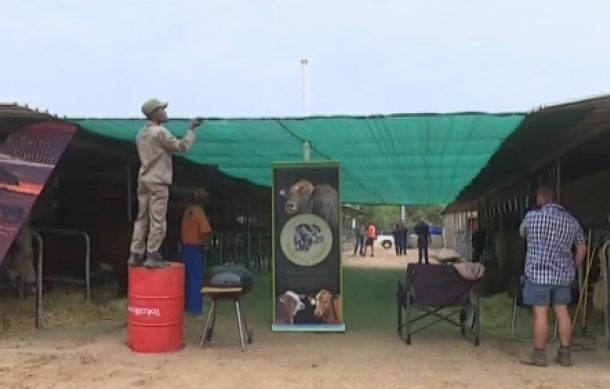
But this year's edition is being held under difficult circumstances, with the livestock component historically an important part of the exhibition having been cancelled following the confirmation of Foot-and-Mouth Disease in the ||Kharas Region.
More than 500 animals were expected to form part of the livestock exhibition.
This is not the first time Foot-and-Mouth Disease (FMD) has disrupted the Windhoek Show.
In 1961, an outbreak that started in July in the eastern Windhoek district forced organisers to cancel the entire exhibition just five days before it was due to open.
More than six decades later, FMD has again disrupted the show, but this time only its livestock component. The cancellation means visitors will not see the cattle and small-stock displays that have traditionally been among the show's major agricultural attractions.
From the first 22 exhibitors in 1899 to hundreds of businesses and exhibitors today, the Windhoek Show has evolved with the economy.